"Today is the day of great triumph. There is a king of Spain. He has been found at last. That king is me."
—Nikolai Gogol, 'Diary of a Madman and Other Stories'
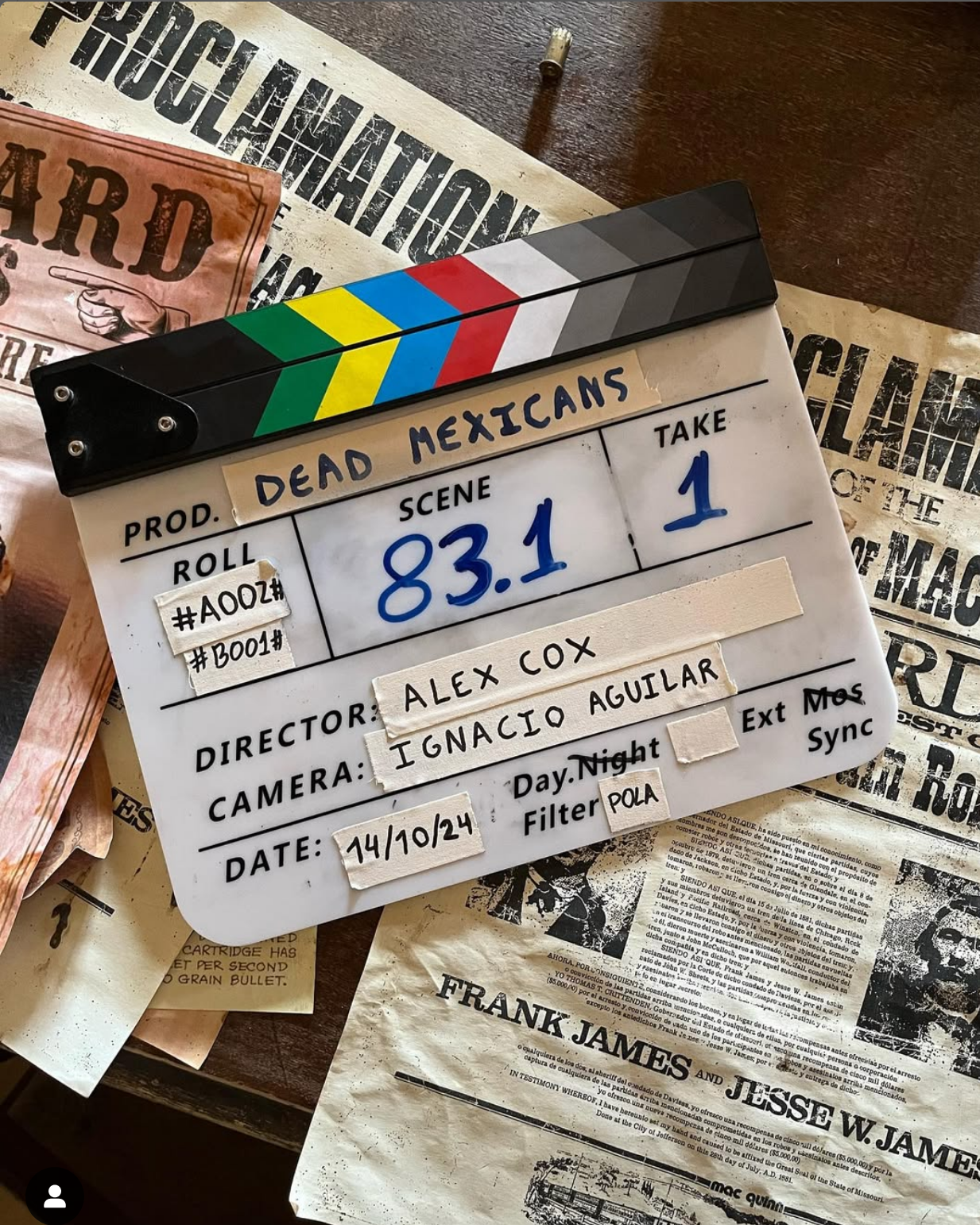
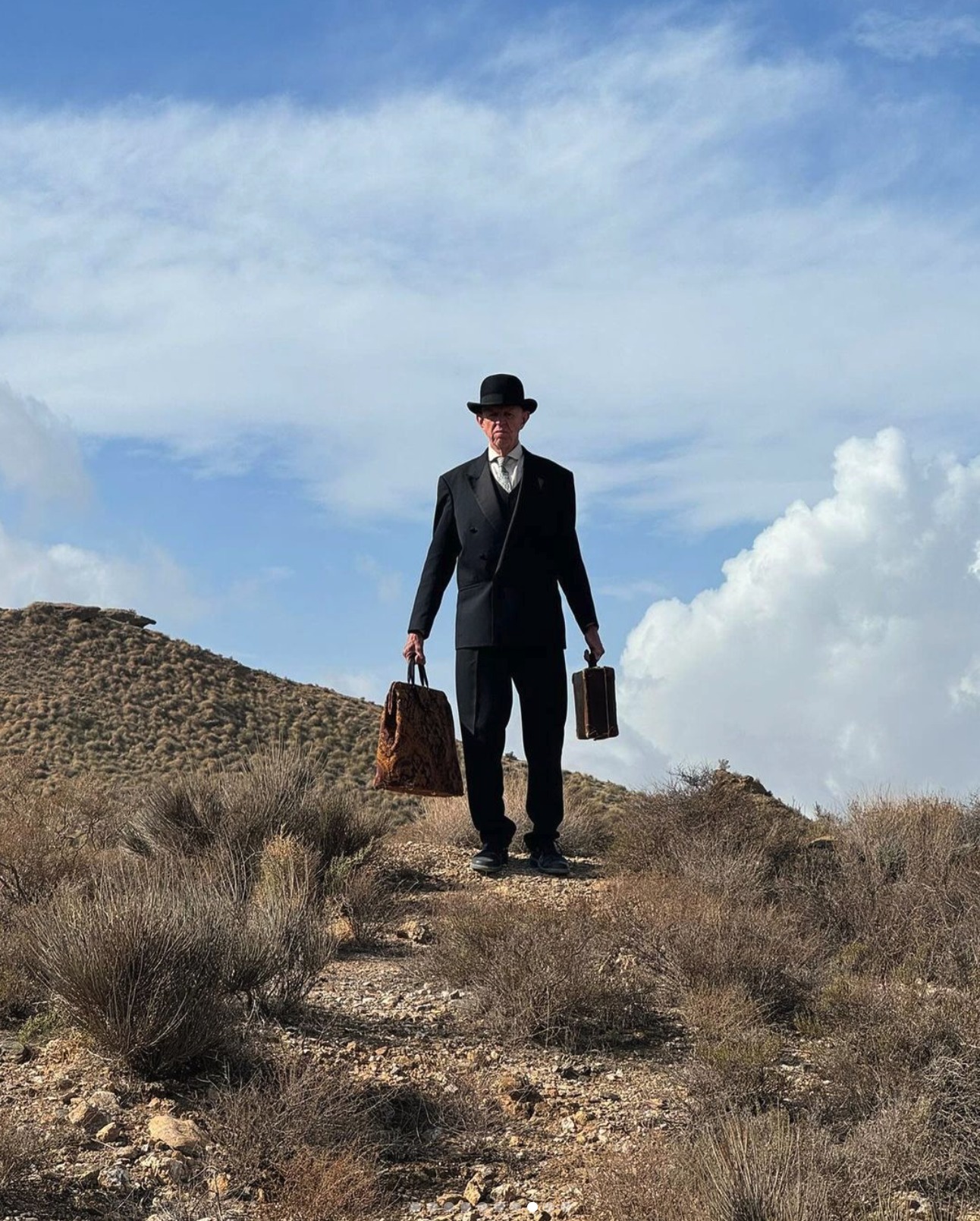
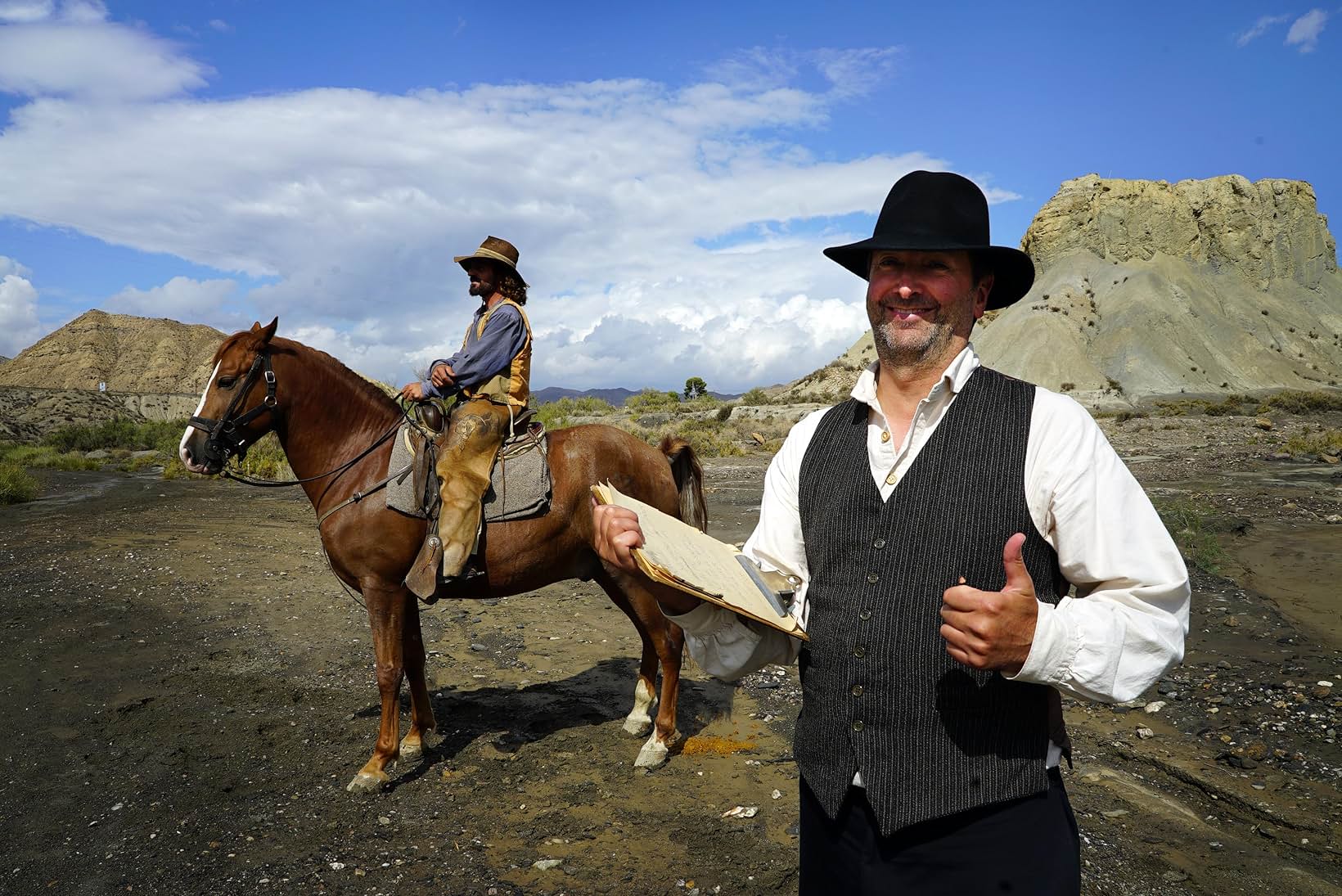
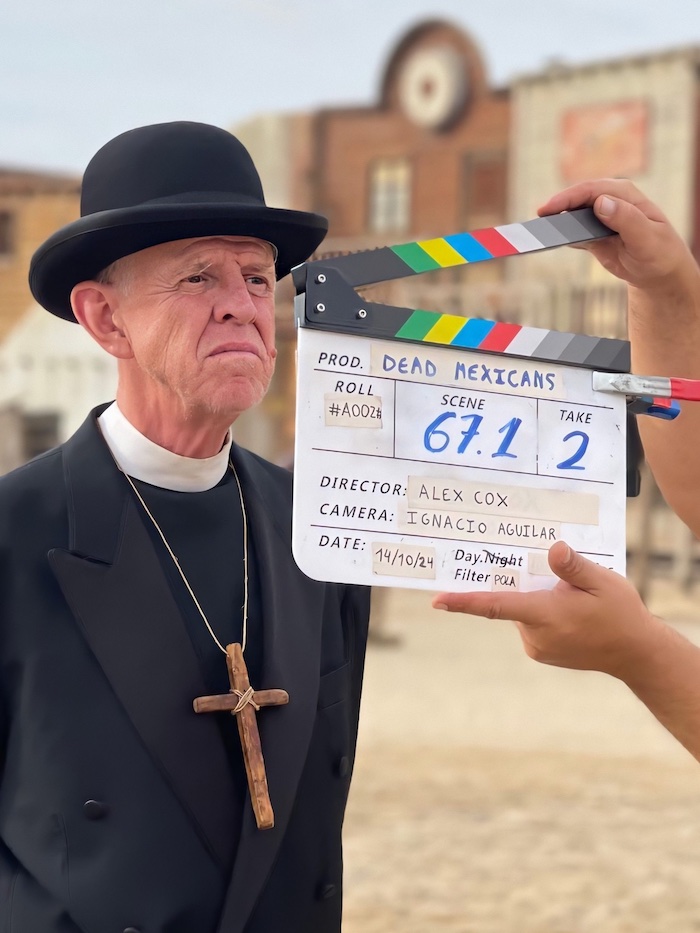
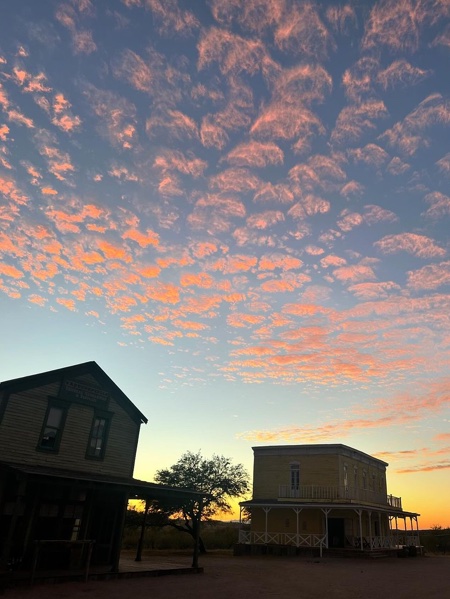
The first shooting day in Spain was Monday, October 14th, with the crew filming Ed Tudor Pole close-ups to be used in an otherwise animated sequence; Pole flew into Almería from Gatwick to play the role of Strindler's father. But he was also there to participate in the script reading on Saturday night in the carriage house at Fort Bravo. Then the actors and crew moved out into the Tabernas desert north of Almería, with two Sony FX-3 recording the action. The next day, the set was filled with various extras, horses, and wagons—shooting the "El Paso" exteriors during daylight then moving into the Yellow Rose Saloon, ending with a brief night-time exterior.
"The destination of our swindler-hero Strindler is El Paso, Texas, where Johnny Behan is engaged in Government work." The real Behan lived in El Paso during the 1890s, working as a "Chinese Exclusion Inspector," arresting illegal Chinese immigrants. (Behan had been a founding member of the "Anti-Chinese League" in Tombstone, Arizona—something all the Wyatt Earp biographers somehow seem to miss despite trying to make him as unlikeable as possible). The character of Behan was a featured in Cox's last film, Tombstone Rashomon, and he is portrayed in both films by actor Jesse Lee Pacheco. That lawless, primitive El Paso is long gone from the Texas landscape in the United States, so the production needed to switch continents to find the ideal setting...
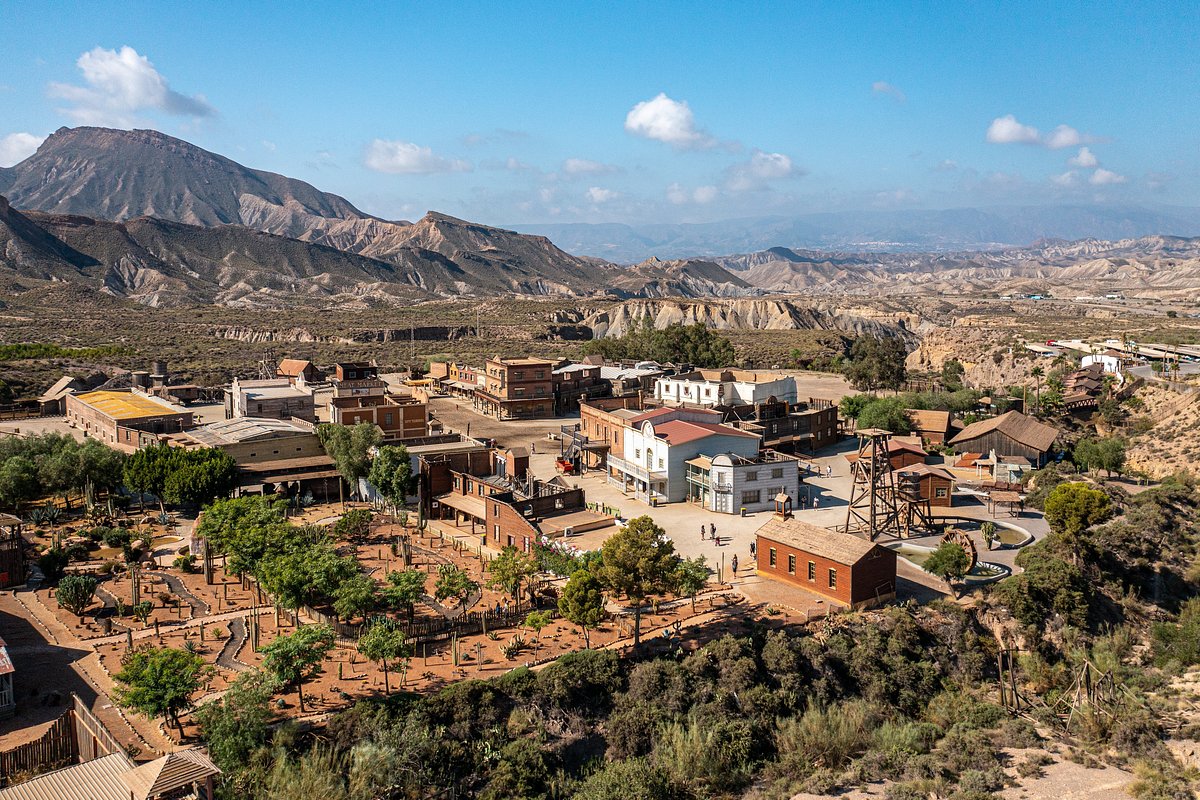
"In 1965, Carlo Simi built the town of 'El Paso' for Sergio Leone's For a Few Dollars More," says Cox. Originally known as Yucca City, it's located near the town of Tabernas in the province of Almería, Andalusia, has been used in many other films. "This western set in Spain is known today as Mini Hollywood Studios—it was also used in The Good, the Bad and the Ugly and Doc." Cox first arrived in this area during the 1970s as a pilgrimage, following in Leone's footsteps. "MiniHollywood wasn't called that, it was El Paso or Yucca City because of those films. And there was no tourism like now: in the sheriff's office there was a man with a portable refrigerator, Coca-Colas and beers." Cox then returned to the area a decade later to direct a music video for "Love Kills," a song by Joe Strummer included in Sid and Nancy. He brought Strummer and a young Gary Oldman to the sets of Texas Hollywood and El Cóndor, to Los Escullos and Pozo de los Frailes. A year later, he returned to film Straight to Hell with Strummer, Elvis Costello, the Pogues, Dennis Hopper, Grace Jones, Jim Jarmusch, and even some of the actors in this film.
Mini Hollywood now has three separate towns/itineraries: 'Oasys Park', 'Fort Bravo' and 'Western Leone', and all three are open for visitors and offer different wild west family adventures, with western shows and many other attractions. 'Western Leone' and 'Fort Bravo' are still part time working film locations whereas 'Oasys Park', the largest of the three, is now entirely given over to the theme park business. The town was quiet and empty on the first day of shooting, but the crew would returned later in the week when the park was open to tourists, having pause filming during the mid-day stunt show, and move a few extratemporal onlookers with cameras and iPhones out of shots who might have seemed a touch anachronistic to an 1890s western. (Although, if you seen Cox's film Walker, maybe not!)
10/12/2024: "Alex Cox vuelve tras 38 años al Desierto de Tabernas, después de rodar allí Straight to Hell, esta vez para realizar un largometraje western, con la que afirma que será su última película, pero de una forma distinta. Su nueva propuesta cinematográfica parte de la novela Almas Muertas, de Nicolai Gogol, para hacer una 'versión Western' de una historia irónica y misteriosa que se desarrolla en 1890 en Arizona y se llamará Dead Mexicans."³
The Spanish portion of the shoot was completed after five whirlwind days in the Tabernas Desert of Almería, roughly one third of the production schedule, which would conclude in Arizona. Cox's previous western, Tombstone Rashomon, was shot in six days, total. (There were two units running the whole time. One crew filmed interviews with the principal characters; the other crew shot the action they were talking about. When the interview unit wrapped, they joined the main unit as a second camera crew.) In comparison, Sergio Leone's masterpiece Once Upon A Time in the West was shot on these same Spanish deserts for two-and-a-half months! (The entire shoot lasted four-and-a-half months, or 104 shooting days). The most ambitious portion of this film was in Mini Hollywood, where the El Paso scenes were filmed. These included Strindler's arrival, the frontier bridge to Mexico, and the office of Johnny Behan, Chinese Exclusion Officer. In both this film and the aforementioned Tombstone Rashomon, Johnny is played by "the splendid, Denver-based actor Jesse Pacheco," said Cox at the conclusion of filming. "It feels odd that after just a couple of days Jesse's work is done, yet months remain before we'll see him in the finished film. Time flashes by at an accelerated rate and I find it hard to believe that we were working together only yesterday, that that part is already done, and while I'll live with images of Johnny for months to come, we may not see each other again until the film premieres."
Unfortunately, the Leone Ranch and Fort Bravo were both booked through the film's shooting period. But one of the most intriguing locations in Almería is the site of an elaborate fortress originally constructed in 1969 for the film El Condor. "The company will shoot for two days at MiniHollywood and then at the El Condor set in the Tabernas Desert (Spain). Technicians will partially rebuild the famous site of films like Lee Van Cleef's El Condor and Arnold's Conan the Barbarian. This will serve both as the Mexican area of the main town and the location for the cemetery sequences in the movie."
El Condor features adobe houses, horse stables, an elevated water tank, and a luxurious two-story stone house surrounded a central plaza the size of a soccer field. The entire complex is circled by 30-foot walls with a network of watchtowers and stairways. Situated against a steep hillside, the towers of the fort offer a sweeping view over the surrounding landscape. The site was re-used over the years for a variety of films, usually involving lots of dynamite. Titles include Blindman (1971), featuring Ringo Starr as a love-struck Mexican thief, A Reason to Live, a Reason to Die (1972), Get Mean (1975), Conan the Barbarian, and Dollar for the Dead (1998), a Sergio Leone tribute starring none other than Repo Man lead Emilio Estevez. The painted signs that appear—'Pension Coyote'—are leftovers from the making of Italian film Honolulu Baby (2000), set in a nameless South American town populated entirely by beautiful women. The 'Pension Coyote' originally served as the General's house in El Condor, from where actress Marianna Hill strategically undressed in front of a second-floor window to distract the fortress guards, while Jim Brown and Lee Van Cleef quietly climbed the fortress walls. The crumbling fort sits on private land, accessible only by hiking from a nearby access road. producer Guillermo de Oliveira drove down to Tabernas and visited all the locations—El Paso, desert-scapes, precipices and canyons. Cox relayed, "Needless to say there were some... ah... challenges. We must repair a road to get into the Oasis (a grove of palm trees in the desert, planted for Lawrence of Arabia), and it may be impossible to get the wagon and the stagecoach, plus their horses, all the way up to La Magdalena (a triangular rock formation which appears notably in the Leone movies), for a scene where the two vehicles collide." Cox remained positive and put his faith in the team. "El Condor will require substantial restoration, as a local alternative," says Cox. "It is here that we will build our cemetery."
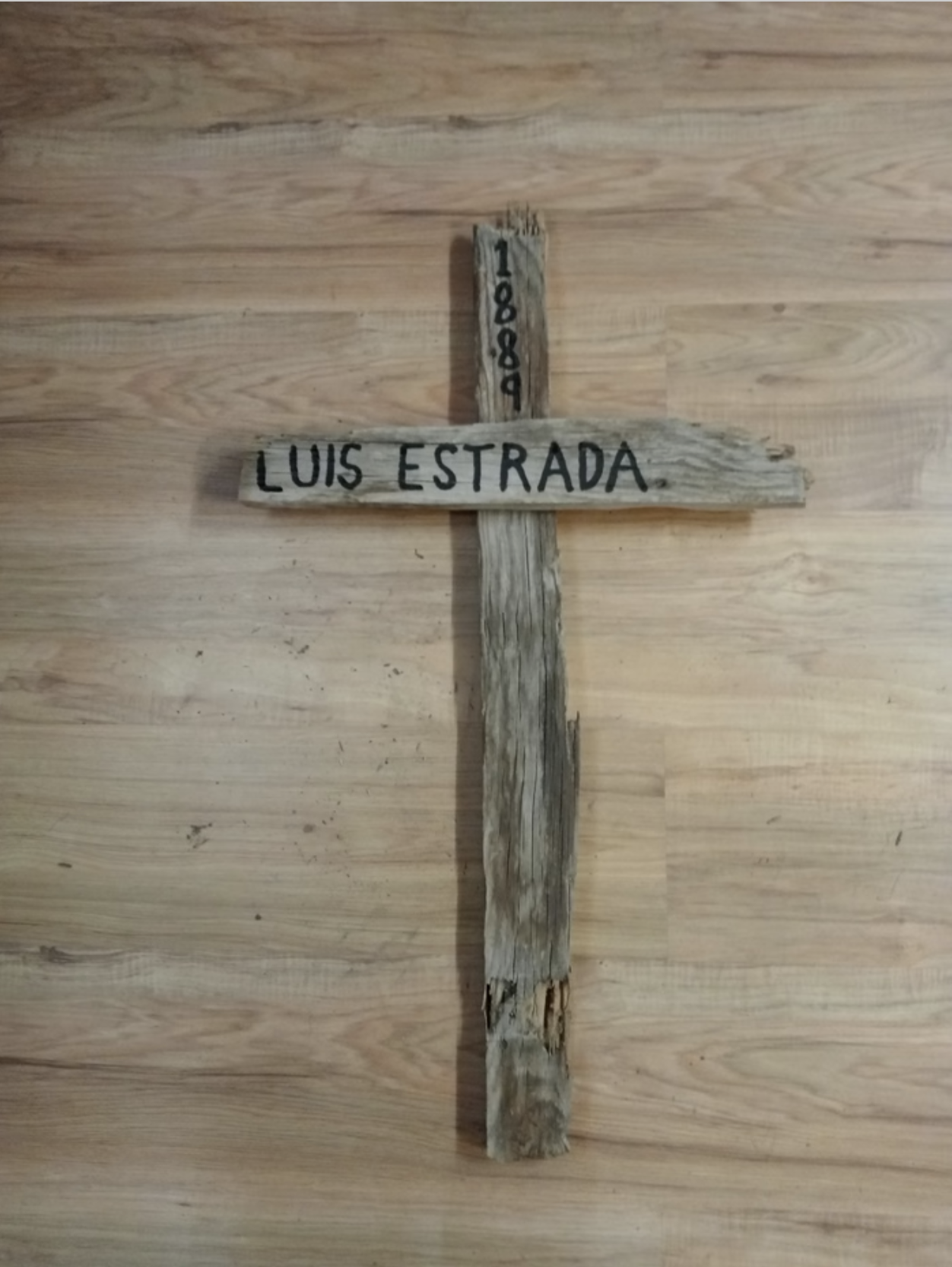
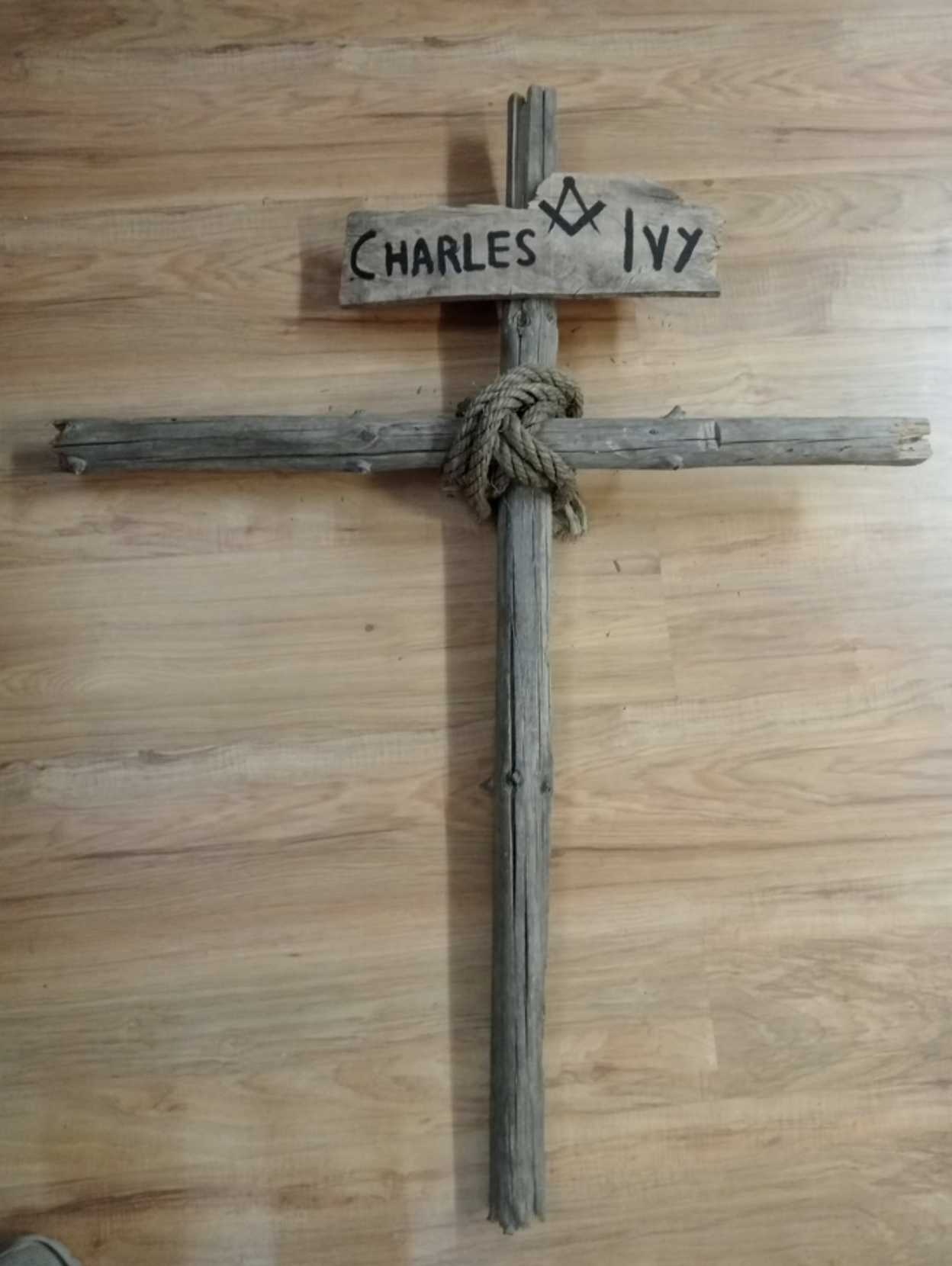
The bodies buried in those graves (at least the names of the bodies) are important, too. They are the real names of crowdfunders who each paid to have his or her name scratched onto a grave marker in the cemetery (there were 60 names in all, at $200 bucks a pop, such as Pardeep Sahota, and more listed below), or in saloon cameos ($2,500 each—talk about paying your dues to break into show business!). One backer/extra, James Flower of the UK, tweeted of his experience, "I've spent the last three days in sunny Almería, Spain, on a whirlwind tour of the desert and three local Western film sets, culminating in extra work on Alex Cox's 'last movie.' (Let's hope not!) For those who didn't mind being memorialized in a less-respectful manner, their names could slso be seen on 'WANTED' posters in the Sherrif's office (costing $1,500 apiece, but the costs of crimes may vary), as seen behind backer Pablo L. Antonelli, below:
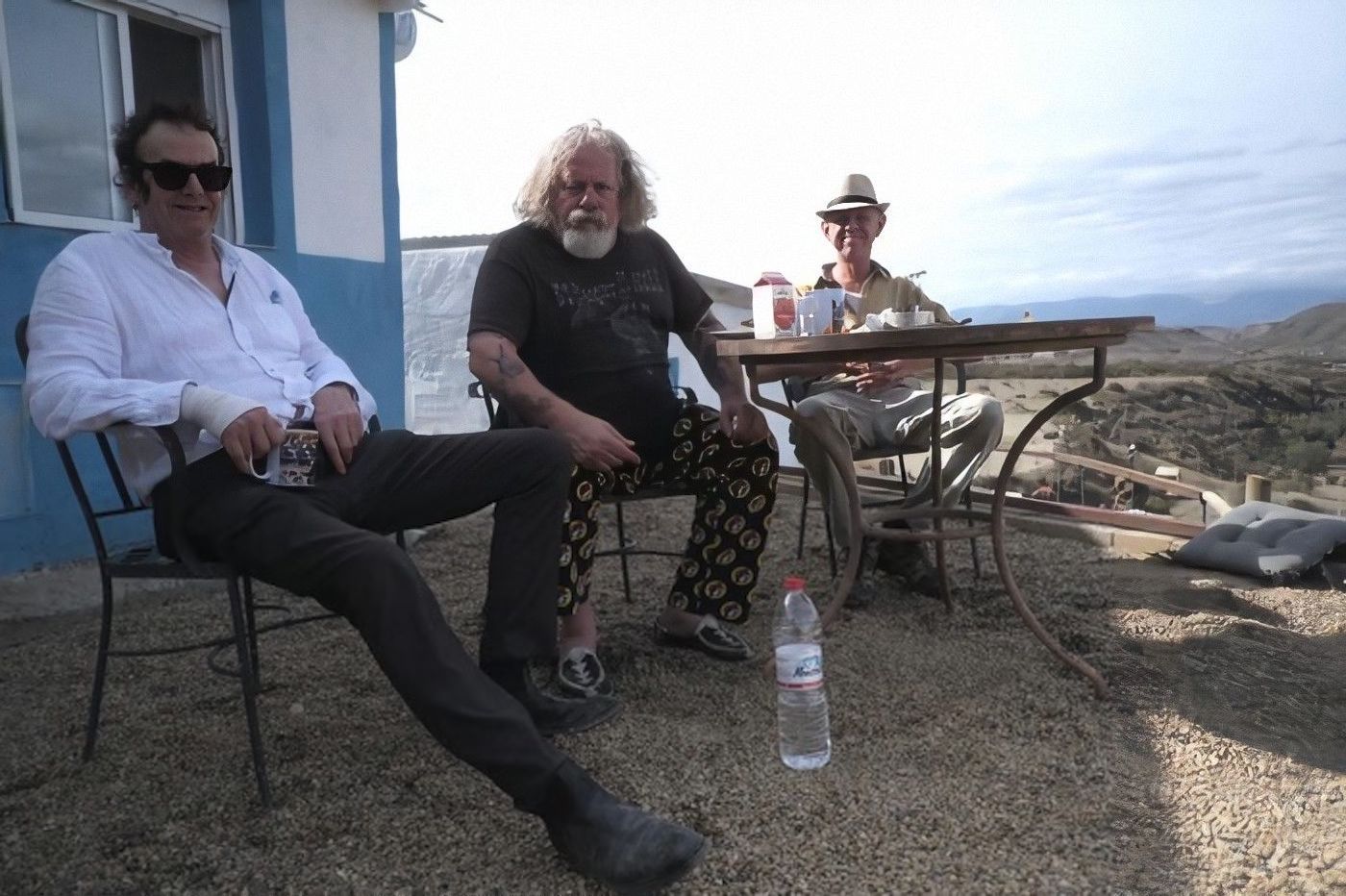
Going by the mood on the set, it seemed that everyone backing the project was thrilled to be a part of Cox's "last film", and proud to have helped to get it get made. The feeling from Cox was obviously mutual, as he took time out to chat and pose for photographs, despite being the star, writer, director and producer in the middle of a film shoot! As Kickstarter says on its website, "When backers chip in funding and help spread the word, they too become part of these independent works." Cox adds, "Several backer-producers and cameo actors joined us for the reading and the shoot. It was a pleasure to see them, and I hope their experience of making this low-budget Western was a good one." (Shown: El Indaliano; Lubilder, James Flower; Lubilder and Cox and David Miguel Morales.)
Speaking of financial backing, you'd think that filming in beautiful desert vistas and dilapidated old western towns out in the middle of nowhere would be cheap, but one production challenge was the high cost of horses and wagons. When a production moves from one location to another, the horses have to go there too, in a trailer—you can just have a new horse in every scene—and the wagon on the back of a truck. Where Cox made Straight to Hell in Almería, Spain, there is now an interstate-style freeway, where picturesque horse-drawn vehicles do not venture. But in addition to the truck driver, every horse comes with a team of humans! First and most important is the Horse Master, who, obviously, masters the horses. Then there is the rider, or wagon driver. But there is also the ramalero, whose job is apparently to hold the reins. And at the end of the day comes the veternario, who will check and make sure that the animal is still in good order. So on a day when one horse-drawn wagon and two passing cowboys were to be filmed, there was a team of ten or more people to watch out for the beasts. As you can imagine, there is a budgetary impact. But what is the alternative? Cox has made no less than four films in which a couple of guys wander through the desert in Spain or Mexico on foot—but this is a Western. There has to be horses!
Para facilitar el raccord de mirada de los actores alguien tenía que correr como una diligencia. "Alguien".
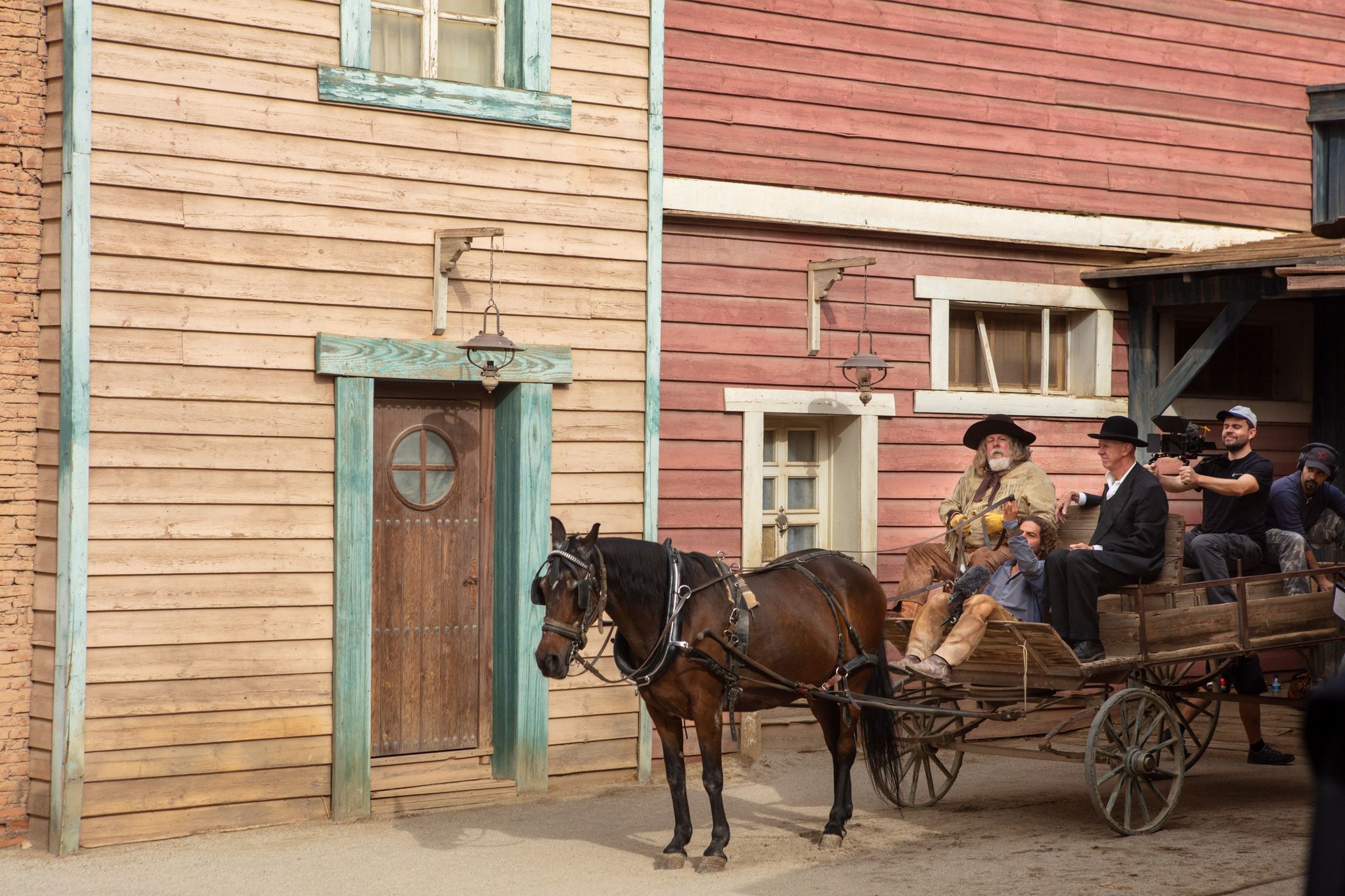
After the shoot in Spain, Cox recalled the wagon, below, "drawn by the fine steed Princesa. Princesa was accompanied by the horse master Diego, ramaleros (wranglers) and truck drivers, and contrary to my initial doubts all were necessary throughout. And all were experienced film people, who knew what they were doing, and helped us greatly. Princesa worked hard, sometimes pulling that wagon with five people (two actors, cameraman, sound recordist and ramalero) on board. She never faltered, and earned her hay." Also in the photo is Zander Schloss, playing 'Borracho,' and to his right Eva, ace first AD and production jefa. Cox noted, "Zander was stalwart in his role as the teamster. After he wrapped, he went down to Almería city. His day job as a Circle Jerk has him travelling constantly, but always 'for work.' So he and a friend are off to Morocco for a holiday. Zander brought with him a home-made buckaroo-trapper outfit, a mass of leather, coyote heads and fox tails, which is a sight to see. Last night saw a spirited discussion of what to do with it. Should we put it in a box and ship it to Arizona (where Borracho also works)? Eva advised against this: there was a three-in-one chance, based on her experience, that it would be lost in transit. So it was decided that Zander should hold onto it, not lose it in the Casbah, and bring it with him for the second stage of the shoot."
Other members of Cox's company soon appeared. Del Zamora's flight from LA was delayed for seven hours—a non-weather-related incident for which he and a hundred other passengers were offered neither explanation or compensation. All the stuff one might expect from a government-regulated airline (little meal coupons, perhaps a room in a grim airport hotel) were ignored by Iberia, an airline we shall in future avoid." Del took some photos that he posted online as the others slept, writing: "Thank you to my dear friend, Alex Cox. My clock is still on Los Angeles time. So, everyone is asleep while I wander the property, where we are staying... This is my 2nd time working in Spain and my 284th speaking role in movies and television shows. 43 years actively working.".. and sleepwalking!
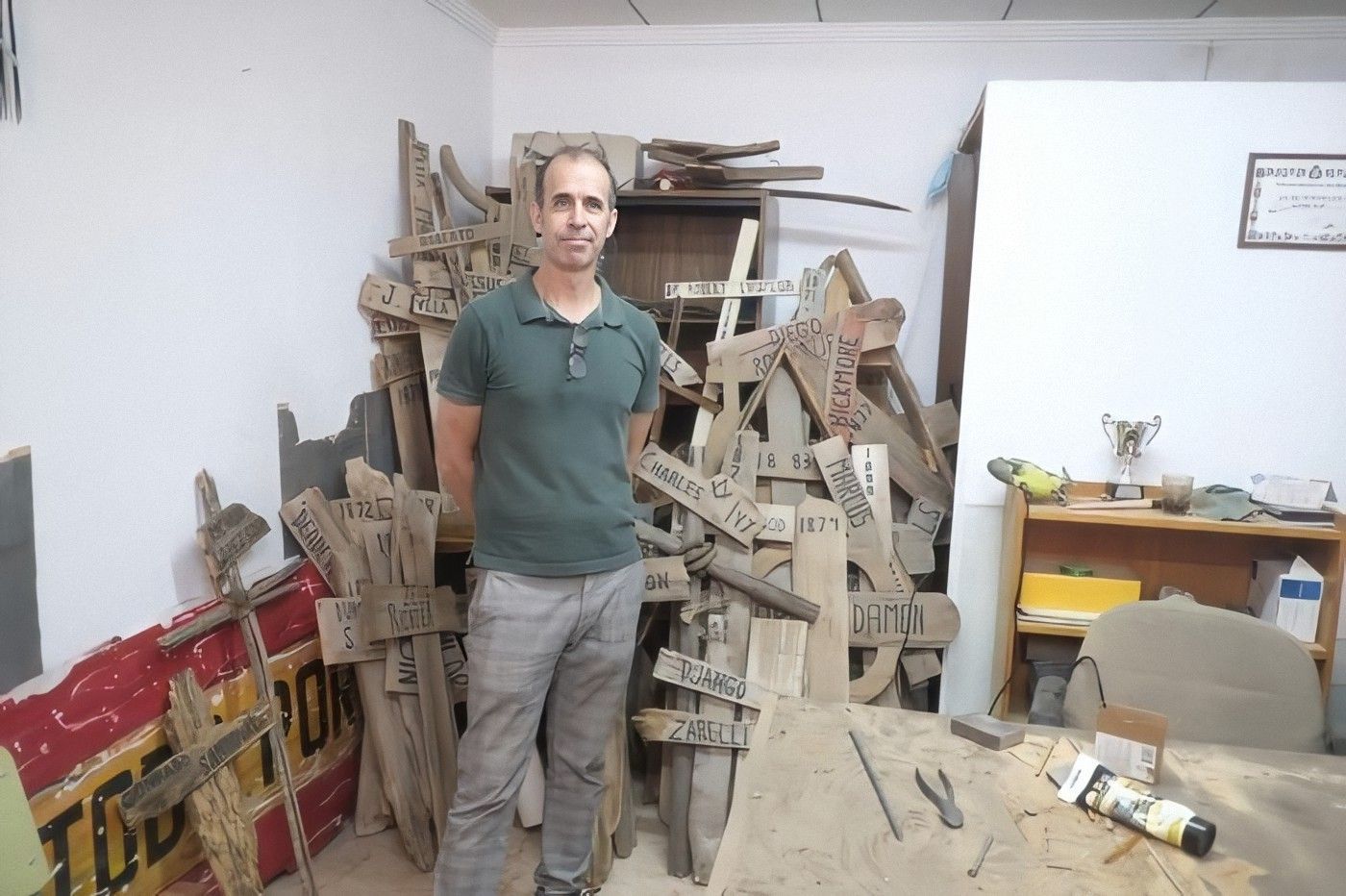
The final scene took place alongside the deteriorating remains of a fortress first built for the movie El Condor (one of the Kickstarter campaign rewards was to have your name on a cemetery cross). In the late afternoon sun, the crew moved quickly to plant wooden grave markers in the ground, using rocks to reinforce them against the harsh winds. Once the set was ready, a few quick takes before the sun went down. The shoot concluded with our cemetery scene, where Strindler lists, then burns, all the crosses which have Mexican surnames, and it was a wrap for the Almería production. Below is Leonardo, against a background of the grave markers he made, before they were torched.
Cox summed it up this way: "The entire cast and crew of this segment were sensational. I'll close with two messages of special thanks: to Ignacio, the remarkable DP who did great work on the Tabernas shoot, and whom I trusted entirely; and to Merritt, who shot second camera, who will produce the upcoming Arizona sequences, and who is editing the film." (Merritt also took many of the pictures that appear on this page.)
¹—"How 'Dead Souls' Taught Mel Brooks What Comedy Writing Could Be" (New York Times, 10 Nov 2022)
Q: "What's the best book you've ever received as a gift? A: "When I was a young fledgling comedy writer working for Sid Caesar on 'Your Show of Shows,' our head writer was Mel Tolkin, real name Shmuel Tolshinsky. I really looked up to him. (By the way, I was 5-foot-7 and he was six feet tall.) He was a bona fide intellectual, thoroughly steeped in the traditions of great Russian literature. One day he handed me a book. He said to me, 'Mel, you're an animal from Brooklyn, but I think you have the beginnings of something called a mind. The book was 'Dead Souls,' by the magnificent genius Nikolai Gogol. It was a revelation. I'd never read anything like it. It was hysterically funny and incredibly moving at the same time. It's like Gogol stuck a pen in his heart, and it didn't even go through his mind on its way to the page. It truly raised the bar of what I considered to be important writing. It was a life-changing gift, and I still read it once a year to remind myself of what great comic writing can be."
²—¡Aquí está el cartel oficial de la 14ª edición de Almería Wéstern Film Festival! Este tríptico collage, diseñado por Celia Coe, rinde homenaje al icónico director italiano Sergio Leone. "Con la presentación del póster, el festival se prepara para una edición que promete ser tanto un viaje al pasado como un foco crítico de temas cruciales que afectan a Almería y su entorno," comenta la autora. "El póster es un relato panorámico que viaja desde el blanco y negro al color, con el Desierto de Tabernas y la figura de Leone en el centro, hasta el empoderamiento femenino y los tres temas que destacan esta edición, reflejando el compromiso ético y social del festival," afirma el director del festival, Juan Francisco Viruega. (#14AWFF organizado por @tabernas_ayto con la colaboración de @oasysminihollywood / @fortbravooficial) Translation: Here is the official poster for the 14th edition of Almería Wéstern Film Festival! This triptych collage, designed by Celia Coe, pays tribute to the iconic Italian director Sergio Leone. "With the presentation of the poster, the festival is preparing for an edition that promises to be both a trip to the past and a critical focus on crucial issues that affect Almería and its surroundings," comments the artist. "The poster is a panoramic story that travels from black and white to color, with the Tabernas Desert and the figure of Leone in the center, to female empowerment and the three themes that highlight this edition, reflecting the ethical and social commitment of the festival," says the festival director, Juan Francisco Viruega. (#14AWFF organized by @tabernas_ayto with the collaboration of @oasysminihollywood / @fortbravooficial) Also, "ALEX COX EN MINIHOLLYWOOD REGRESO AL DESIERTO" by David Miralles, El Interrogatorio, on Instagram.
³—"Go West: Alex Cox on making his last movie and the re-release of his first" by Michael J. Casey (Boulder Weekly, 28 Aug 2024): "Like Tombstone-Rashomon, Cox's latest endeavor is crowdfunded. What's different is the attention. 'Normally, if I was doing my last movie, that would end up in Hollywood Reporter and in the Guardian in England,' Cox says. 'But because of the basis of the piece, it hasn't been mentioned anywhere in the mainstream media.' That basis: the 1842 Russian novel by Nikolai Gogol, Dead Souls. 'In terms of alternative media and in terms of the public reaction, the response to this has been far better than either of the crowdfunders I did,' he says. 'Which really encourages me. Because, although the governments of the U.S. and England are really trying to gee up the population and get them ready for a war with Russia, there's no support for it at all in the population.' That's how Cox came to Dead Souls and Russian literature in the first place. The more 'we were being told we should hate the Russians and despise Russian culture,' the more he became interested in what the Russians had produced. So Cox started with Dostoevsky and Tolstoy and found them 'quite amazing.' Then came Dead Souls. 'It's so lively, so interesting, the characters are so good,' he says. 'This was the thing that you could turn into a Western.'"
10/12/2024: "Alex Cox vuelve tras 38 años al Desierto de Tabernas, después de rodar allí Straight to Hell, esta vez para realizar un largometraje western, con la que afirma que será su última película, pero de una forma distinta. Su nueva propuesta cinematográfica parte de la novela Almas Muertas, de Nicolai Gogol, para hacer una 'versión Western' de una historia irónica y misteriosa que se desarrolla en 1890 en Arizona y se llamará Dead Mexicans."