     |




















 |




|

"The longer and more carefully we look at a funny story, the sadder it becomes."
—Nikolai Vasilievich Gogol
"Dead Souls" (Russian: "Мертвыя души") is a novel by Nikolai Gogol (Russian: Николай Васильевич Гогчль), first published in 1842. The original title was "The Wanderings of Chichikov, or Dead Souls. Poema," which was eventually contracted to merely read "Dead Souls."
The novel chronicles the travels and adventures of Pavel Ivanovich Chichikov and the people whom he encounters. These people typify the Russian middle aristocracy of the time. Gogol himself saw his work as an "epic poem in prose", and within the book characterized it as a "poem in prose". Gogol intended the novel to be the first part of a three-volume work, but burned the manuscript of the second part shortly before his death. Although the novel ends in mid-sentence (like Sterne's Sentimental Journey), it is regarded by some as complete in the extant form.
According to director Alex Cox: "The book is about a man who is acquiring the names of dead serfs. The book was written during the [era of] serfdom, which I guess you could say was equivalent to slavery and that still existed in Russia when Gogol wrote the book. The year that the the American Civil War began, serfdom was abolished in Russia. So Russia actually preceded the United States in abolishing slavery by a few years. At the time that serfdom existed, it was possible to acquire a large number of serfs, and if you acquired enough—I don't know exactly how many you had to have—you could be an aristocrat of sorts. Maybe you'd even be a prince, who knows? And so the protagonist of 'Dead Souls,' Chichikov, is acquiring serfs. But because he's doing it on the cheap, he's actually acquiring the names of dead serfs, who he then going to present to the requisite authorities in order to acquire glory in Czarist Russia."¹

|
_Nikolai_Gogol_1842_title_page.jpg)
—Mel Brooks²
In the Russian Empire, before the emancipation of the serfs in 1861, landowners had the right to own serfs to farm their land. Serfs were for most purposes considered the property of the landowner, who could buy, sell or mortgage them, as any other chattel. To count serfs (and people in general), the classifier "soul" was used: e.g., "six souls of serfs". The plot of the novel relies on "dead souls" (i.e., "dead serfs") which are still accounted for in property registers. On another level, the title refers to the "dead souls" of Gogol's characters, all of which represent different aspects of poshlost (a Russian noun rendered as "commonplace, vulgarity", moral and spiritual, with overtones of middle-class pretentiousness, fake significance and philistinism).
|
At the time of the novel, the Russian government taxed landowners based on how many serfs (or "souls") they owned. This was determined by the census, which was conducted infrequently, so landowners were often paying taxes on serfs that were no longer living, thus "dead souls." It is these dead souls, existing only on paper, that Chichikov seeks to purchase from the landlords in the villages he visits, whom he tells he will relieve of a needless tax burden.
|
|
Chichikov at first assumes that the ignorant provincials will be more than eager to give their dead souls up in exchange for a token payment. The task of collecting the rights to dead people proves difficult, however, due to the persistent greed, suspicion, and general distrust of the landowners. He still manages to acquire some 400 souls, swears the sellers to secrecy, and returns to the town to have the transactions recorded legally.
|
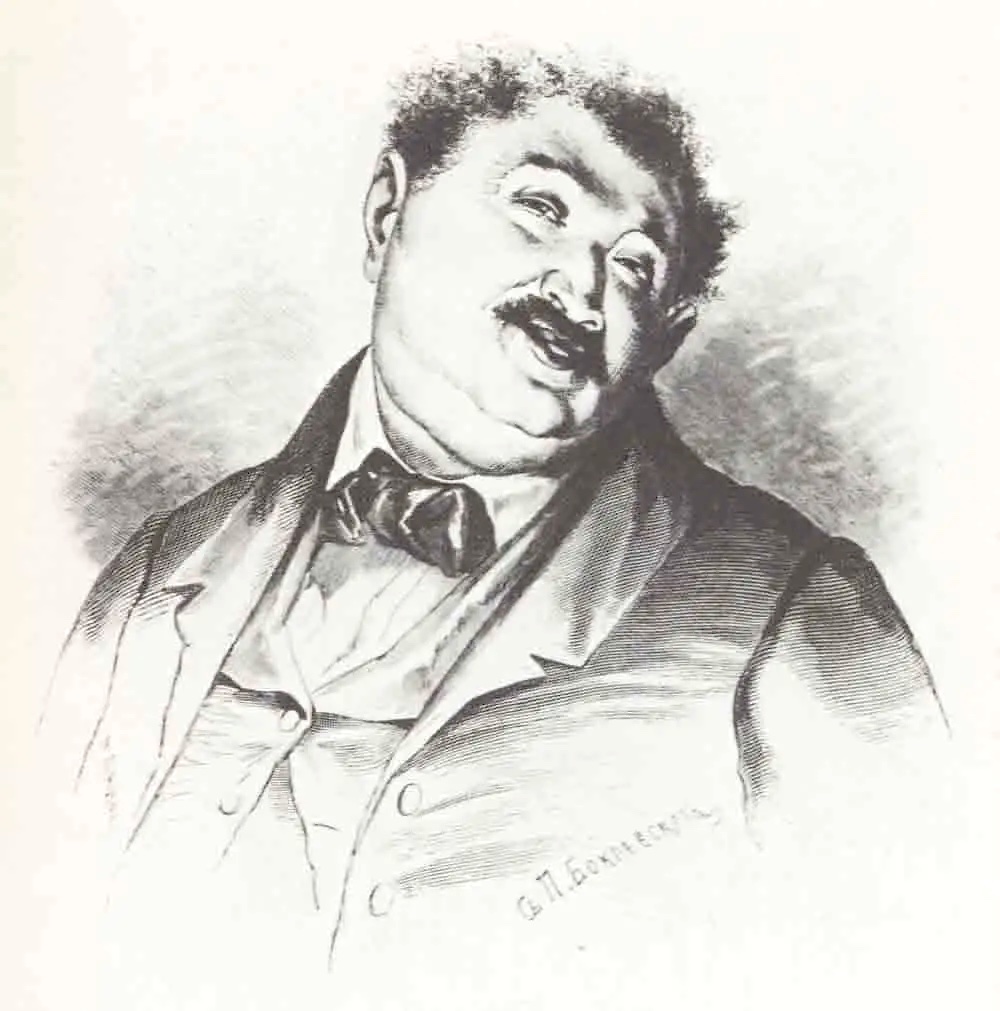
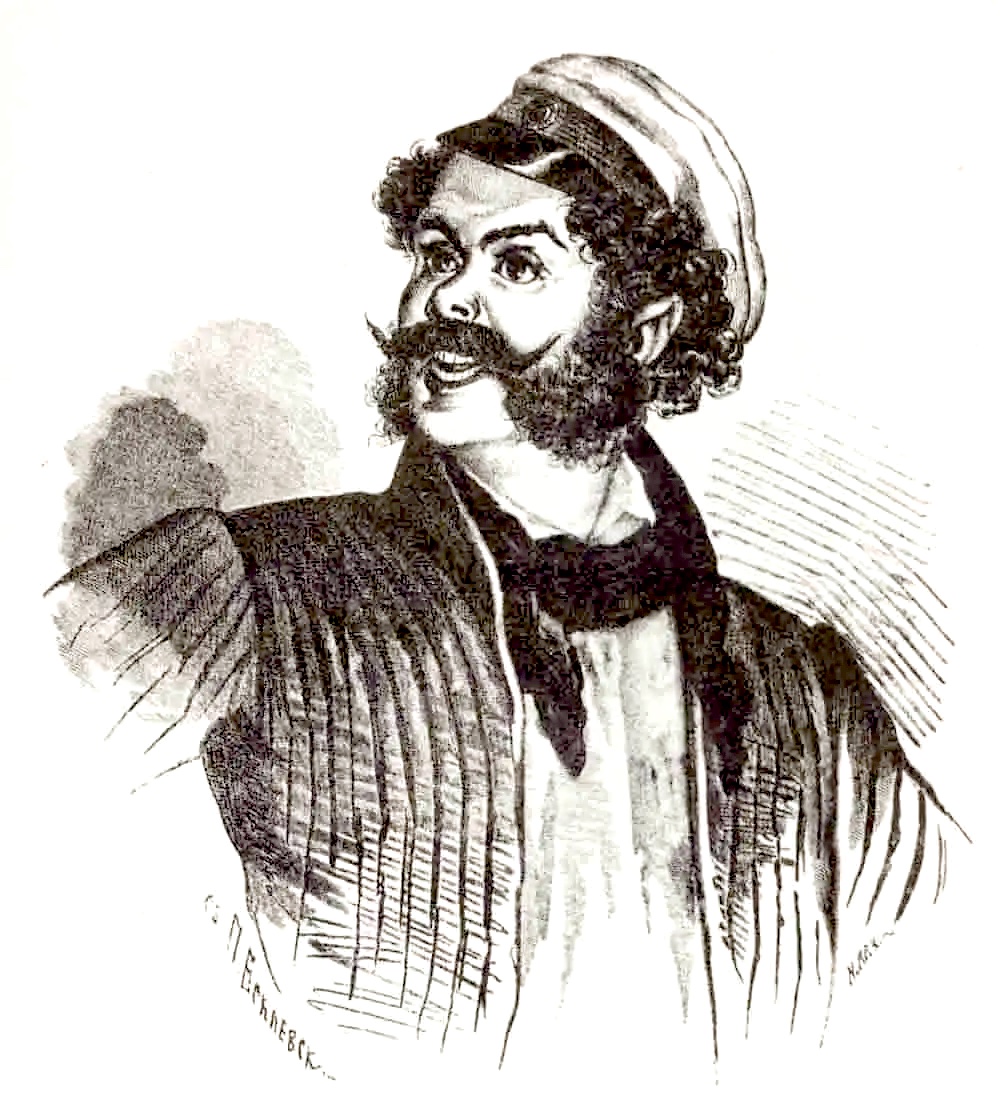
Mrs. Lizanka Manilov is a friendly, loving woman with a good education who struggles to run her house with conviction. Mrs. Manilov and her husband are still dedicated to one another after eight years of marriage and he shares her lack of conviction and authority.
|
|
|

|
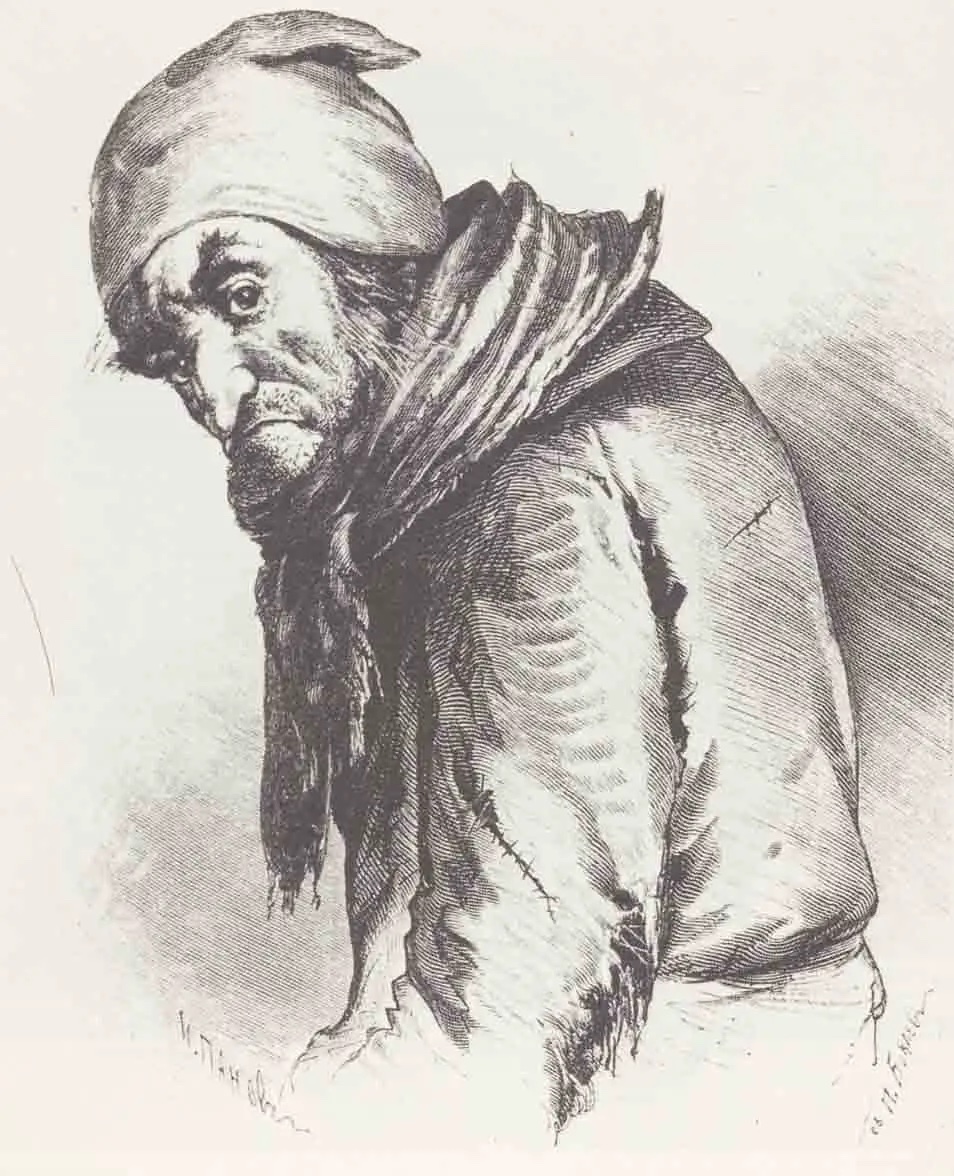
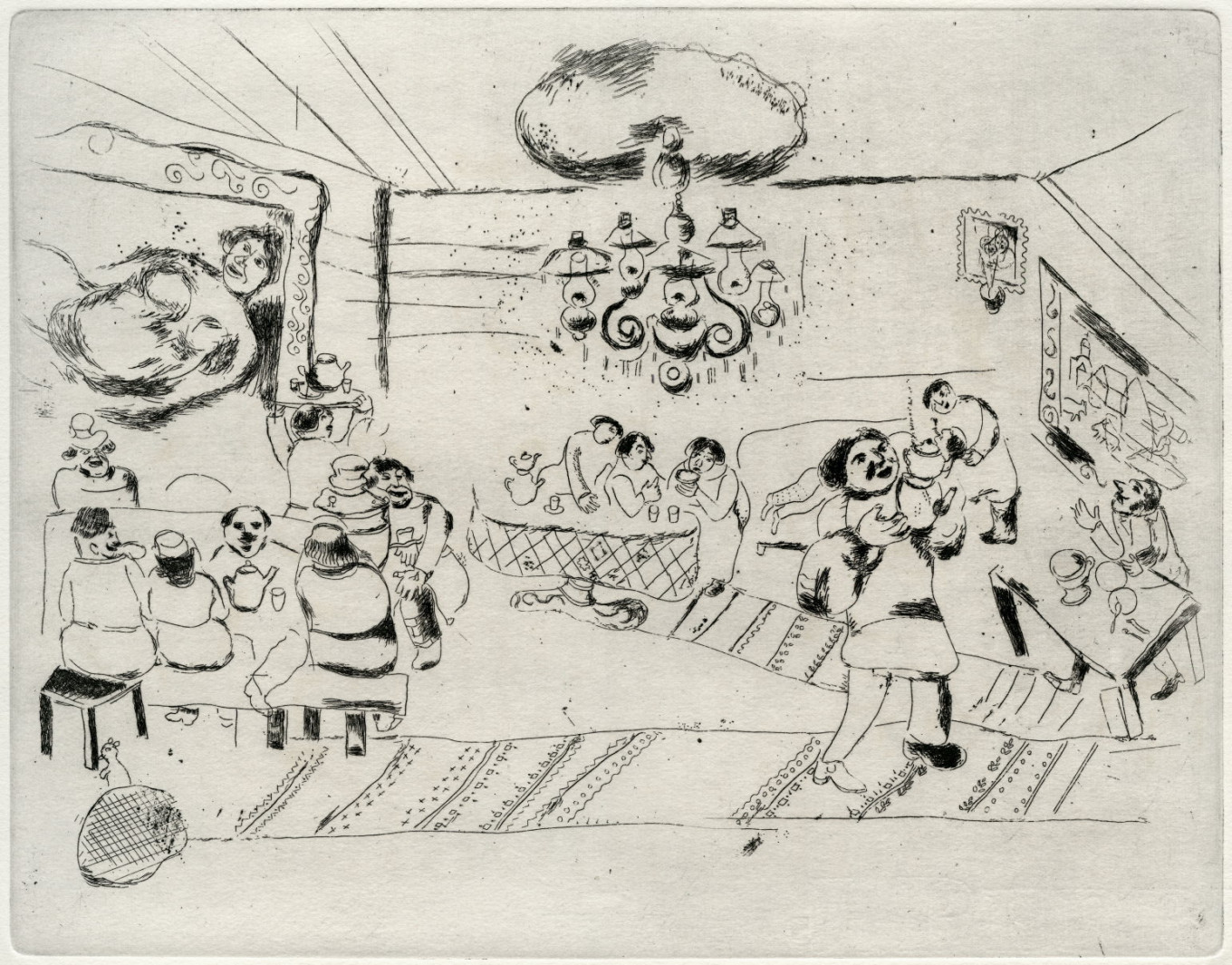
Pyotr Petrovich Petukh is another landowner Chichikov meets by accident, the corpulent gourmand Petukh (whose name is the word for rooster) invites Chichikov to feast for multiple days. An embodiment of gluttony, Petukh insists his guests eat and drink lavishly, as he does himself.
|

Back in the town, Chichikov continues to be treated like a prince amongst the petty officials. The Governor holds a ball in honor of Chichikov's purchases of dead souls. Very suddenly, however, rumours flare up that the serfs he bought are all dead, and that he was planning to elope with the Governor's Daughter. In the confusion that ensues, the backwardness of the irrational, gossip-hungry townspeople is most delicately conveyed. Absurd suggestions come to light, such as the possibility that Chichikov is Napoleon in disguise or the notorious vigilante 'Captain Kopeikin'.
|
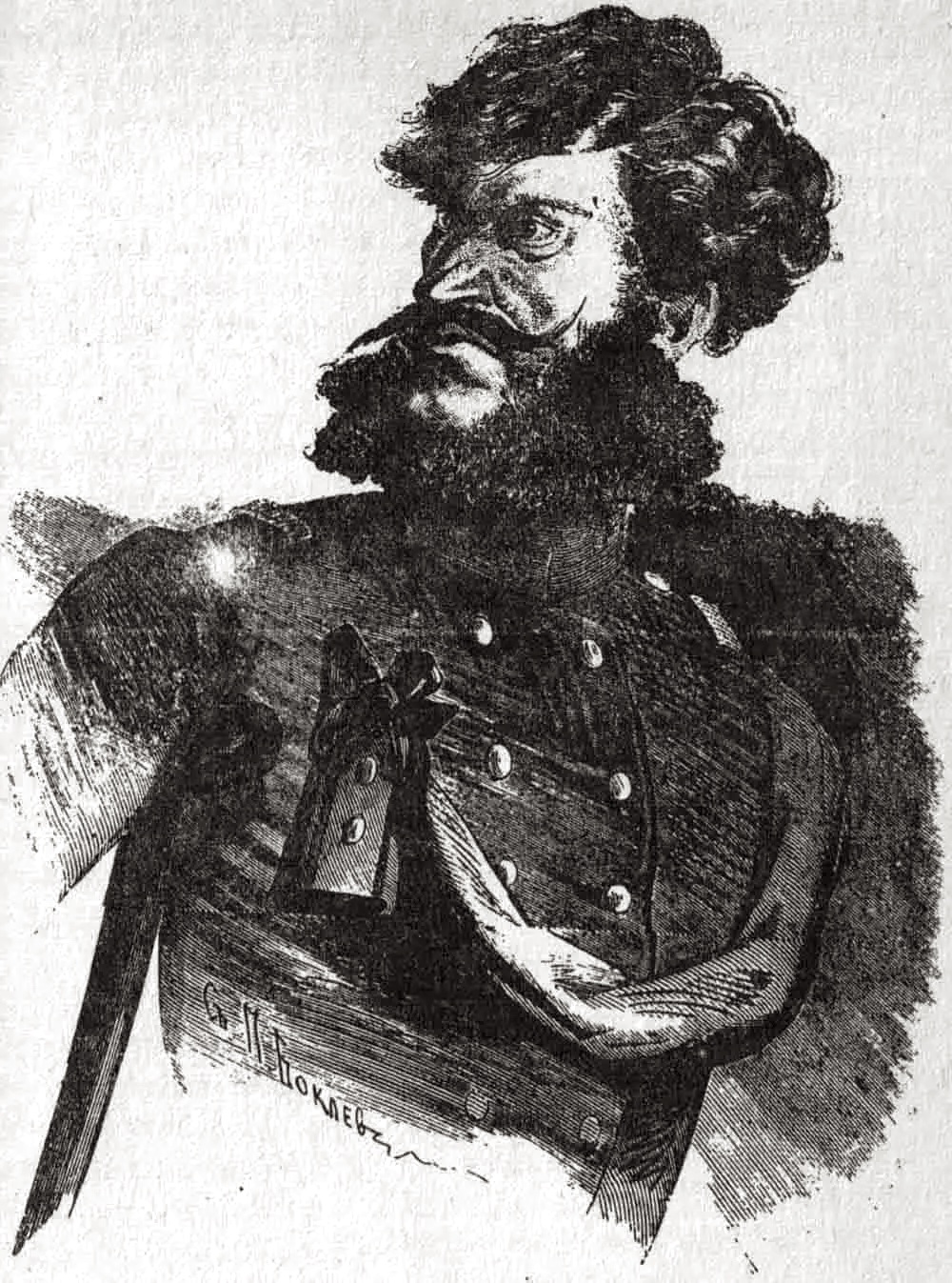
The townspeople have greatly overestimated Chichikov, who is in reality a former mid-level government official fired for corruption who has narrowly avoided jail. His macabre mission to acquire "dead souls" is actually just another one of his "get rich quick" schemes. Once he acquires enough dead souls, he will take out an enormous loan against them and pocket the money. But when Chichikov shows interest in the governor's daughter, the bellicose Nozdryov, one of the landowners, announces to everyone Chichikov's scheme of buying dead souls. Disgraced, Chichikov is forced to flee the town.

"It fascinated me that 'Dead Souls' is the first part of what Gogol intended as a trilogy, but he could never even complete the second book. He destroyed the second draft [of the second book] multiple times and never even got into the third draft. There are fragments of the second draft, including the miserable childhood experiences of the protagonist, which are just great. And we've included those in the script as well."
—Alex Cox¹
|

Chichikov meets Andrei Ivanonovich Tentelnikov, a 33-year-old bachelor and idle landowner. A prickly and silly bachelor, Tentetnikov's name evokes shadow, or ten, and pampering, or tetenkat. Chichikov tries to help Tentetnikov gain favor with his neighbor, General Betrishchev, so that Tentetnikov can marry the general's beautiful daughter, Ulinka. The General is a brave and highly decorated war hero who sells dead souls to Chichikov, under the impression that Chichikov is buying dead souls to get one over on an unreasonable uncle. Ulrika, his daughter, is deeply in love with Tentetnikov and they hope to get married—but his disagreements with her father make this seemingly impossible—until the arrival of Chichikov. General Betrishchev sends Chichikov out to bring news of Ulinka and Tentetnikov's betrothal to various relatives. (Through Chichikov's intervention, in parts of the text that are no longer preserved, Tentetnikov and Ulinka become engaged; however, Tentetnikov is sent to Siberia as a political subversive for his liberal views.)
Chichikov agrees to visit many of Betrishchev's relatives, and goes from estate to estate, encountering eccentric characters. He begins with Colonel Koshkaryov, a bureaucracy-obsessed figure of near-universal mockery in his neighborhood. His estate and its serfs are heavily mortgaged and thus can't be sold—even the dead ones. Through his friend Platon Mikhailovich Platonov, Chichikov meets Alexey Ivanovich Lenitsyn. Pages from the novel's manuscript are missing but the story resumes with Chichikov's visit to Lenitsyn. He offers to buy the man's dead souls. Lenitsyn agrees to the deal. (The remainder of the chapter is lost, but Lenitsyn returns in a later surviving chapter.)
Chichikov is finally able to buy land from Semyon Semyonovich Khlobuyev, a landowner with a terribly kept estate and overwhelming debts. The men haggle politely over the price of the estate. Chichikov is borrowing money to complete the deal and wants to delay payment as long as possible. Khlobuev needs money now in order to start over. He has a rich aunt but she will not lend him the money. When Chichikov learns about Khlobuyev's rich elderly aunt, he decides to forge a will to enrich himself. So after finally reaching a point where he could attain his dreams of social status through legal but morally questionable means, Chichikov now commits an actual crime that could invite legal consequences. Then at some point, the box with all his papers is stolen, and it becomes clear that someone is informing on Chichikov and his machinations.
Meanwhile, a distraught Khlobuev visits Afanasy Vasilievich Murazov, the local alcohol monopolist—a position which means he has purchased the right to sell alcohol, collect taxes on the government's behalf, and keep any surplus remitting taxes to the state. Khlobuev complains that he hardly received anything in the inheritance from his rich aunt. He suspects that Chichikov is up to something. Khlobuev then explains to Murazov that Chichikov forged the rich aunt's will and the fallout from the situation has been chaotic. The confusion has caused anyone with any relation to the rich aunt to come forward and ask for a share of the inheritance.
"The current generation now sees everything clearly, it marvels at the errors, it laughs at the folly of its ancestors, not seeing that this chronicle is all overscored by divine fire, that every letter of it cries out, that from everywhere the piercing finger is pointed at it, at this current generation; but the current generation laughs and presumptuously, proudly begins a series of new errors, at which their descendants will also laugh afterwards."
—Nikolai Gogol, 'Dead Souls.'
In the final section, a long time has passed since the previous chapter. Alexey Ivanovich Lenitsyn, a public official, is still dealing with the fallout from the two contradicting wills of the old woman. Lenitsyn tells Chichikov that the second will changes the distribution of the inheritance of Khlobuev's rich aunt. Chichikov tells the suspicious Lenitsyn that it's no big deal, but immediately leaves to consult with a lawyer. They discuss the issue of the forged will and the lawyer provides advice on how to distract, trick, and otherwise deceive the authorities who are investigating the legitimacy of the will. Chichikov is calmed about his potential legal troubles. He tries on his new clothes but is interrupted by the arrival of a policeman who demands his presence at the local court. Chichikov has no choice but to appear before the magistrates. He is told that his forged will has been found out. Lenitsyn sends Chichikov to jail on a charge of forgery while the court reaches its final verdict. His desperate pleas for mercy are ignored. The police escort him away and they pass Murazov in the hallway. Chichikov pleads with Murazov for help but is dragged away.
Murazov then visits Chichikov in jail and tells him: "what a man you would have been if you had used the same strength and patience in a worthwhile cause" (6852). Chichikov confesses to his crimes but explains that breaking the law was his only possible route to success. He promises to "lead a completely different life" if he could somehow be freed. Murazov agrees to help Chichikov on the condition that Chichikov stops all of his schemes. Chichikov agrees and Murazov departs.
Now alone in the cell, Chichikov imagines his return to the estate he bought and the honest life he might lead. His thoughts are interrupted by the arrival of an official who offers to make all of Chichikov's troubles go away in exchange for a large bribe. Chichikov accepts and is released thanks to the work of his unscrupulous lawyer, who rakes up scandals against the townspeople who have accused his client, tangling up the case and making the situation impossible for the local officials. When Chichikov promises to repent, Murazov intercedes to get him released... but on the condition that Chichikov immediately leave town.
Chichikov prepares his carriage and leaves the town, claiming to be a changed man. But it is not clear that he could ever truly change, or where he will go next. The officials gather together and announce that all those who have been found guilty of corruption will be punished. The novel ends with the prince who arranged Chichikov's arrest giving a grand speech that rails against corruption in the Russian government. The long speech ends abruptly in the middle of a sentence, and the rest of the manuscript is lost.

"Gogol invents nothing; it is the simple truth, the terrible truth."
—Poet Alexander Pushkin
|

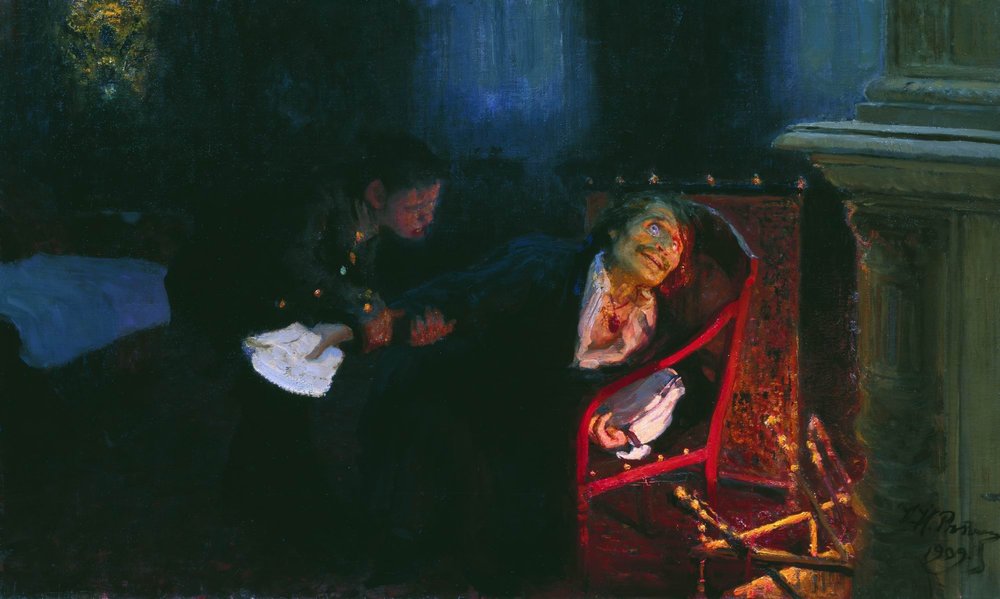
In April 1848, Gogol returned to Russia from a pilgrimage to Jerusalem and passed his last years in restless movement throughout the country. During this period, his fear of perdition (damnation) for the "sinfulness" nature of all his imaginative work intensified. He fell into a state of deep depression. On the night of 24 February 1852, he burned some of his manuscripts, which contained most of the second part of 'Dead Souls.' Soon thereafter, he took to bed, refused all food, and died in great pain nine days later.
According to Cox, "When Gogol was trying to go about writing the three books, the first one was supposed to be about bad people, the second one was supposed to be about good people, and the third one was supposed to be about paradise. But he couldn't even get the second one completed, because it's much easier to write about bad people than good people. It's also more entertaining and much more dramatic. And imagine writing about heaven—how boring that would be, you know?"¹
NOTES ON THIS PAGE:
¹—'The Hard Road: Alex Cox on Crowdfunding Success and a Life in Independent Filmmaking,' by Matt Zoller Seitz, July 28, 2024 (Roger Ebert.com).
Q: "What was it about this material that appealed to you?"
COX: "It's just a great story. It fascinated me that 'Dead Souls' is the first part of what Gogol intended as a trilogy, but he could never even complete the second book. He destroyed the second draft [of the second book] multiple times and never even got into the third draft. There are fragments of the second draft, including the miserable childhood experiences of the protagonist, which are just great. and we've included those in the script as well."
Q: "How do you transplant an 1842 Russian novel to the United States and turn it into a Western?"
COX: "The book is about a man who is acquiring the names of dead serfs. The book was written during the [era of] serfdom, which I guess you could say was equivalent to slavery and that still existed in Russia when Gogol wrote the book. The year that the the American Civil War began, serfdom was abolished in Russia. So Russia actually preceded the United States in abolishing slavery by a few years. At the time that serfdom existed, it was possible to acquire a large number of serfs, and if you acquired enough—I don't know exactly how many you had to have—you could be an aristocrat of sorts. Maybe you'd even be a prince, who knows? And so the protagonist of 'Dead Souls', Chichikov, is acquiring serfs. but because he's doing it on the cheap, he's actually acquiring the names of dead serfs, who he then going to present to the requisite authorities in order to acquire glory in Czarist Russia. My protagonist is acquiring the names of dead Mexicans, because he has a way of turning the names of dead Mexicans into money, or thinks he does."
Q: "Interesting. I can already see that this unmade project has a lot of similarities with previous work that you've done, including the sort of purgatorial aspect that some of your some of your films have, and also the sense that morality is merely an abstract construct for a lot of people."
COX: "When Gogol was trying to go about writing the three books, the first one was supposed to be about bad people, the second one was supposed to be about good people, and the third one was supposed to be about paradise. But he couldn't even get the second one completed, because it's much easier to write about bad people than good people. It's also more entertaining and much more dramatic. And imagine writing about heaven—how boring that would be, you know?"
Q: "Hell is definitely more cinematic."
COX: "And more literary as well. It's more interesting and more painterly. I mean, there are lots and lots of paintings from the Middle Ages about Hell, but there aren't as many paintings of heaven."
²—"How 'Dead Souls' Taught Mel Brooks What Comedy Writing Could Be" (New York Times, 10 Nov 2022)
Q: "What's the best book you've ever received as a gift?
A: "When I was a young fledgling comedy writer working for Sid Caesar on 'Your Show of Shows,' our head writer was Mel Tolkin, real name Shmuel Tolshinsky. I really looked up to him. (By the way, I was 5-foot-7 and he was six feet tall.) He was a bona fide intellectual, thoroughly steeped in the traditions of great Russian literature. One day he handed me a book. He said to me, 'Mel, you're an animal from Brooklyn, but I think you have the beginnings of something called a mind.' The book was 'Dead Souls,' by the magnificent genius Nikolai Gogol. It was a revelation. I'd never read anything like it. It was hysterically funny and incredibly moving at the same time. It's like Gogol stuck a pen in his heart, and it didn't even go through his mind on its way to the page. It truly raised the bar of what I considered to be important writing. It was a life-changing gift, and I still read it once a year to remind myself of what great comic writing can be."
³—The chapters of the second volume that have survived to this day are a reconstruction of five surviving notebooks. These individual chapters were most likely from different drafts/versions that Gogol wrote. There are large gaps, and they differ both in content and in tone—even the ink and paper are different. These surviving pages do not create a complete picture and the author's overall intention with the second book remains unknown to us. ("Why Gogol burned the 2nd volume of his 'Dead Souls' novel," by Alexandra Guzeva, Russia Beyond, Jan. 24, 2022).
ILLUSTRATIONS ON THIS PAGE:
TOP IMAGE: Marc Chagall etching for 'Dead Souls,' 1948. Marc Chagall (1887-1985) studied lithography in Berlin in 1922. While he was still learning this craft, he was approached by the French art dealer Ambroise Vollard to make a series of lithographs illustrating the work of Russian literature of his choice. Chagall proposed "Dead Souls" and spent two years, from 1923 to 1925, producing 96 lithographs. For some reason, Vollard did not immediately begin work on the publication, and then died unexpectedly in a car accident in 1939. Chagall gave a set to the Tretyakov Gallery, but they remained unpublished in France for almost another decade. After the war another publisher, Teriade (the pen name of Efstratios Eleftheriades) commissioned a French translation of "Dead Souls," asked Chagall to make 11 more lithographs and published the book to great acclaim. It won the Grand Prix at the Venice Biennale in 1948.
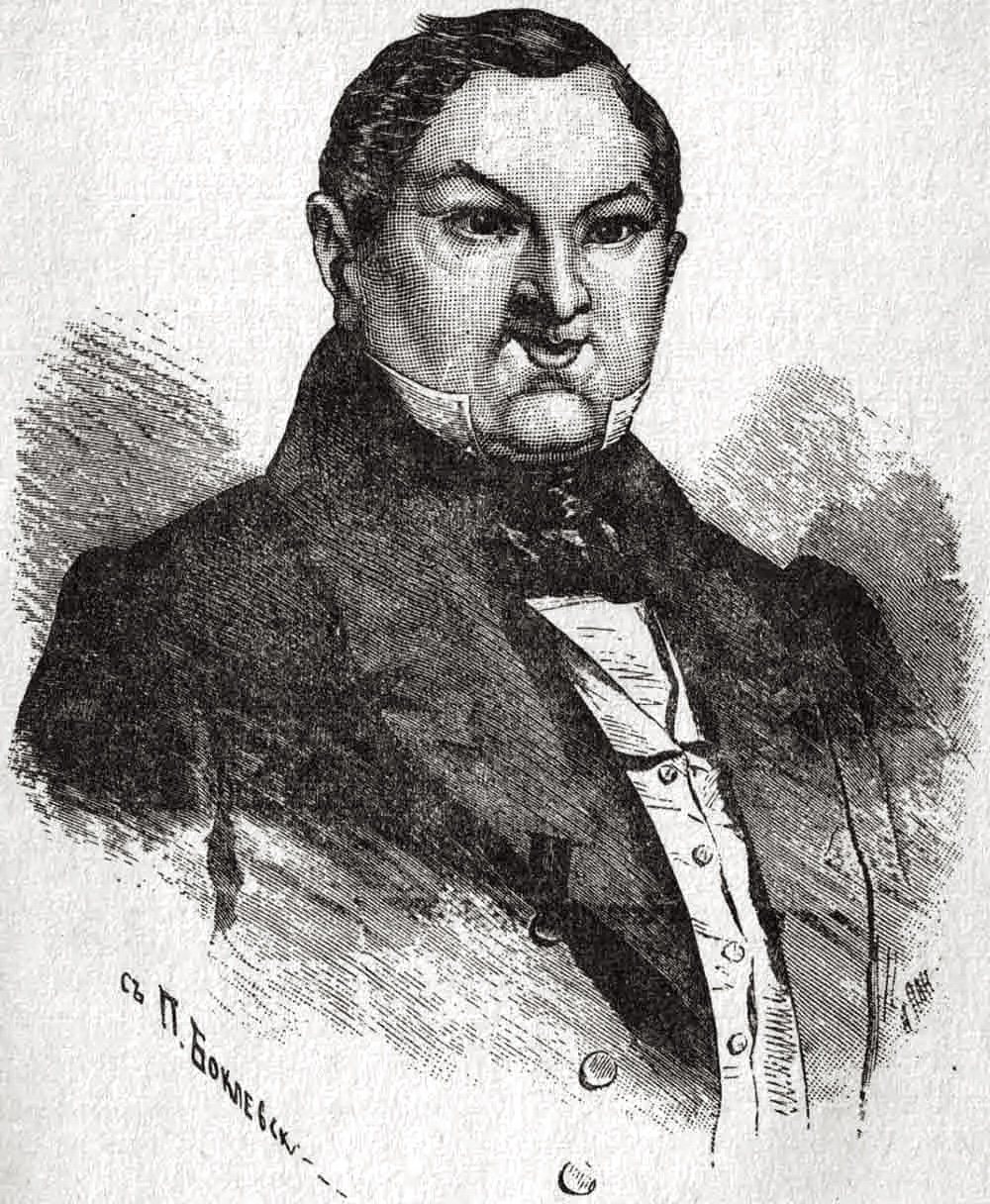
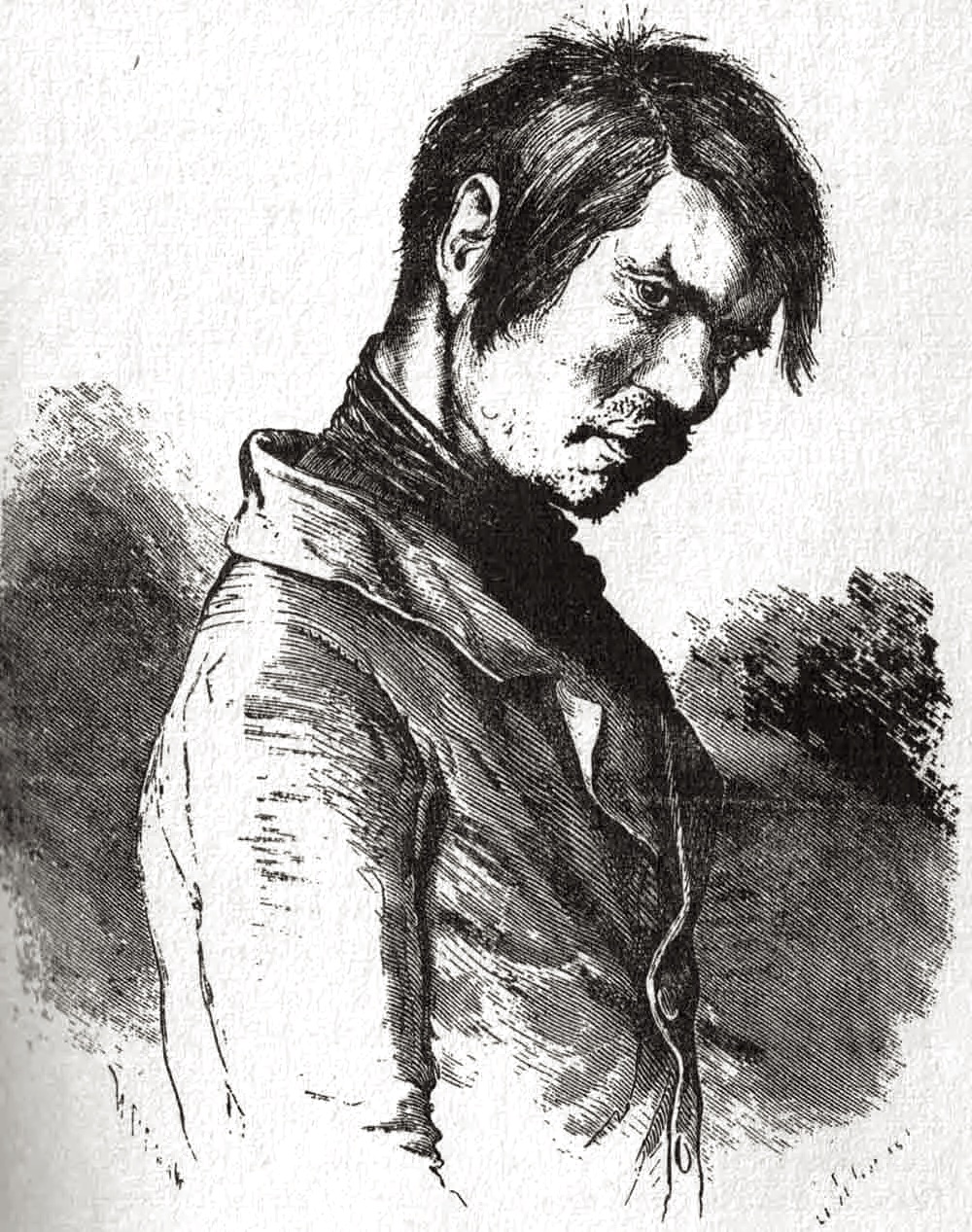
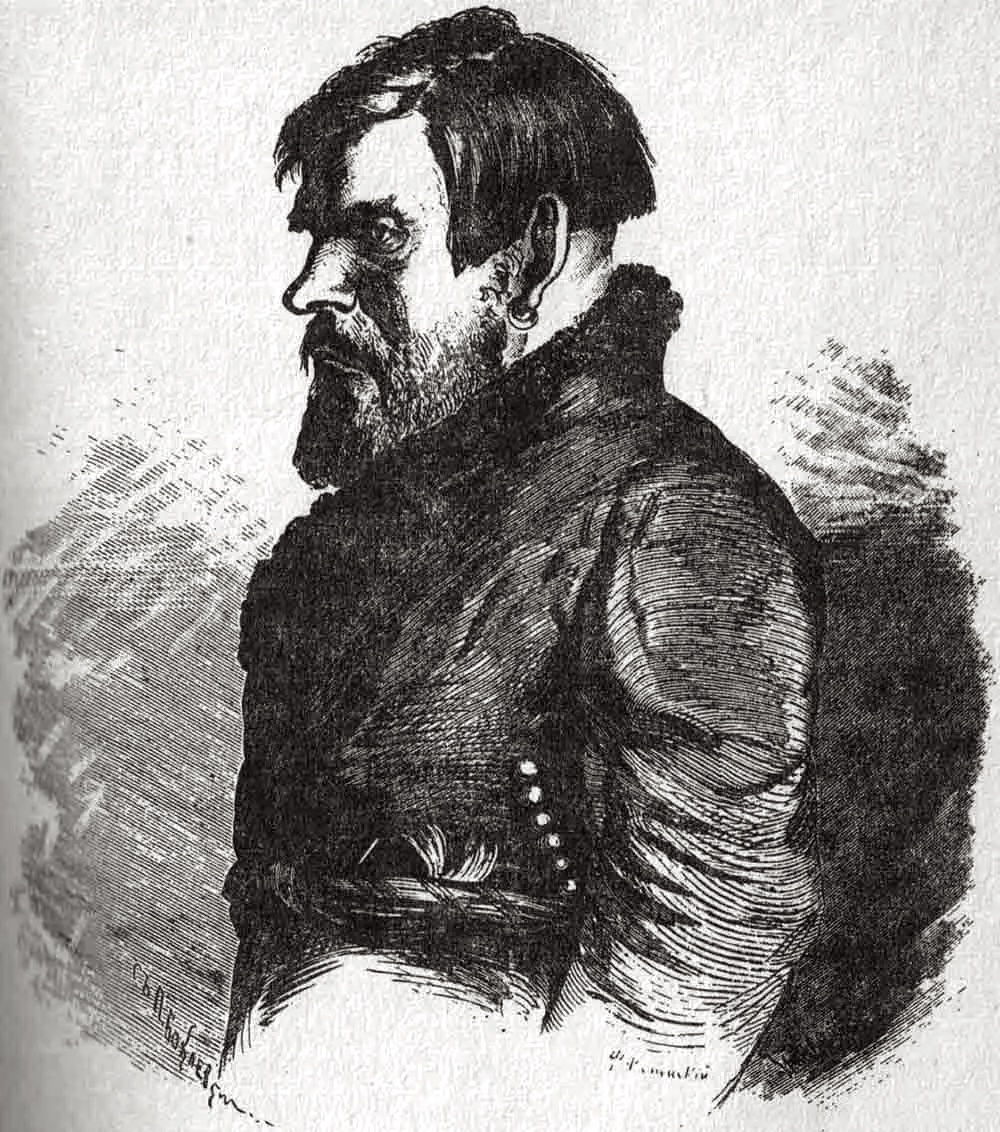
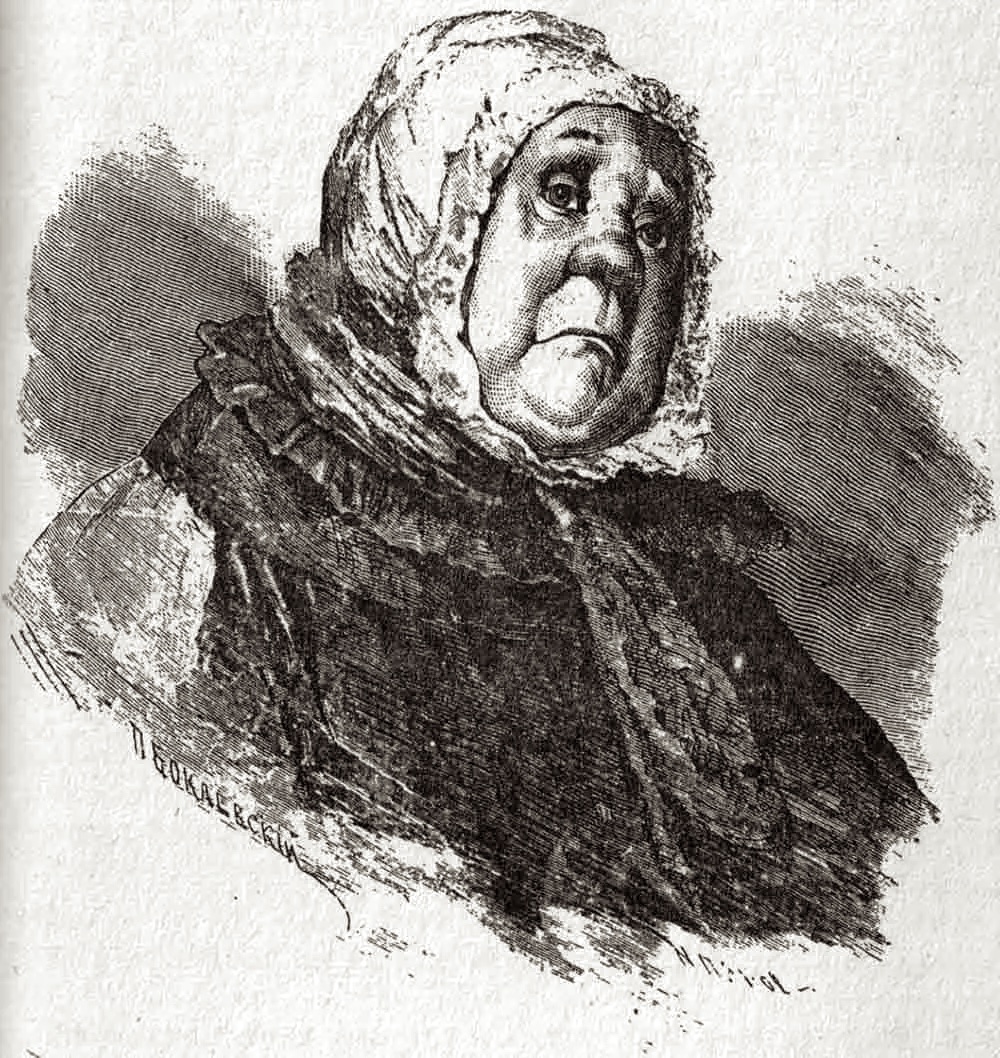
BOOK ONE ILLUSTRATIONS from the 1895 edition by Pyotr Mikhaylovich Boklevskiy.
BOOK TWO ILLUSTRATION A: Чичиков и Тентетников. Иллюстрация М.М. Далькевича. TRANSLATION: "Chichikov and Tentetnikov." Illustration to Gogol's "Dead Souls" by M. Dalkevich, 1901 Edition.
BOOK TWO ILLUSTRATION B: Гоголь, сжигающий рукописи. Ксилогравюра к повести С. Сергеева-Ценского "Гоголь уходит в ночь". 1934 г. TRANSLATION: "Gogol (burning the manuscript of the second part of "Dead Souls"). Wood enrgaving, 1934, by Nikolay Dmitrevsky.
ILLUSTRATION BELOW: Ilya Efimovich Repin: "The Self Immolation of Gogol," 1909. State Tretyakov Gallery, Moscow.