     |



















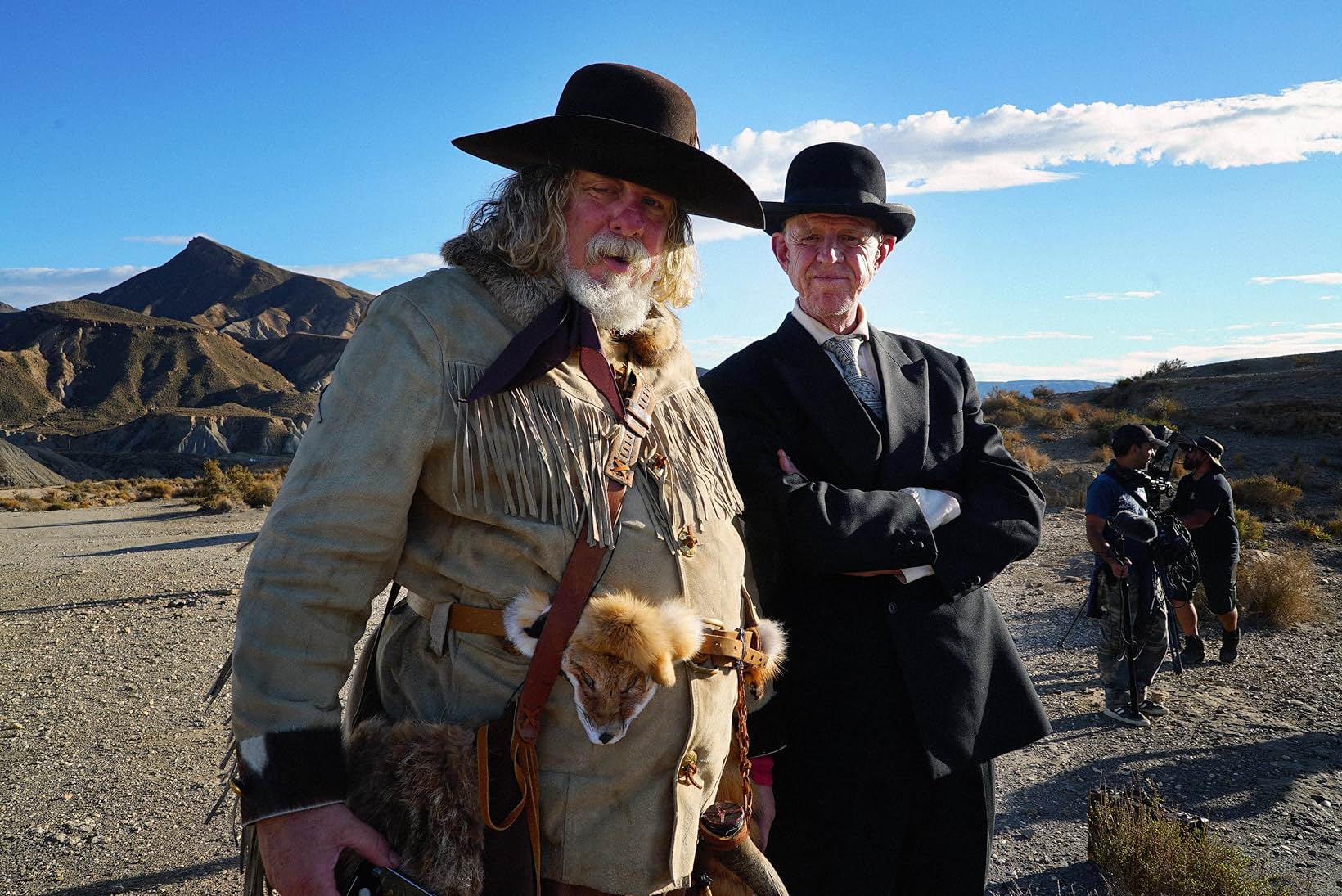


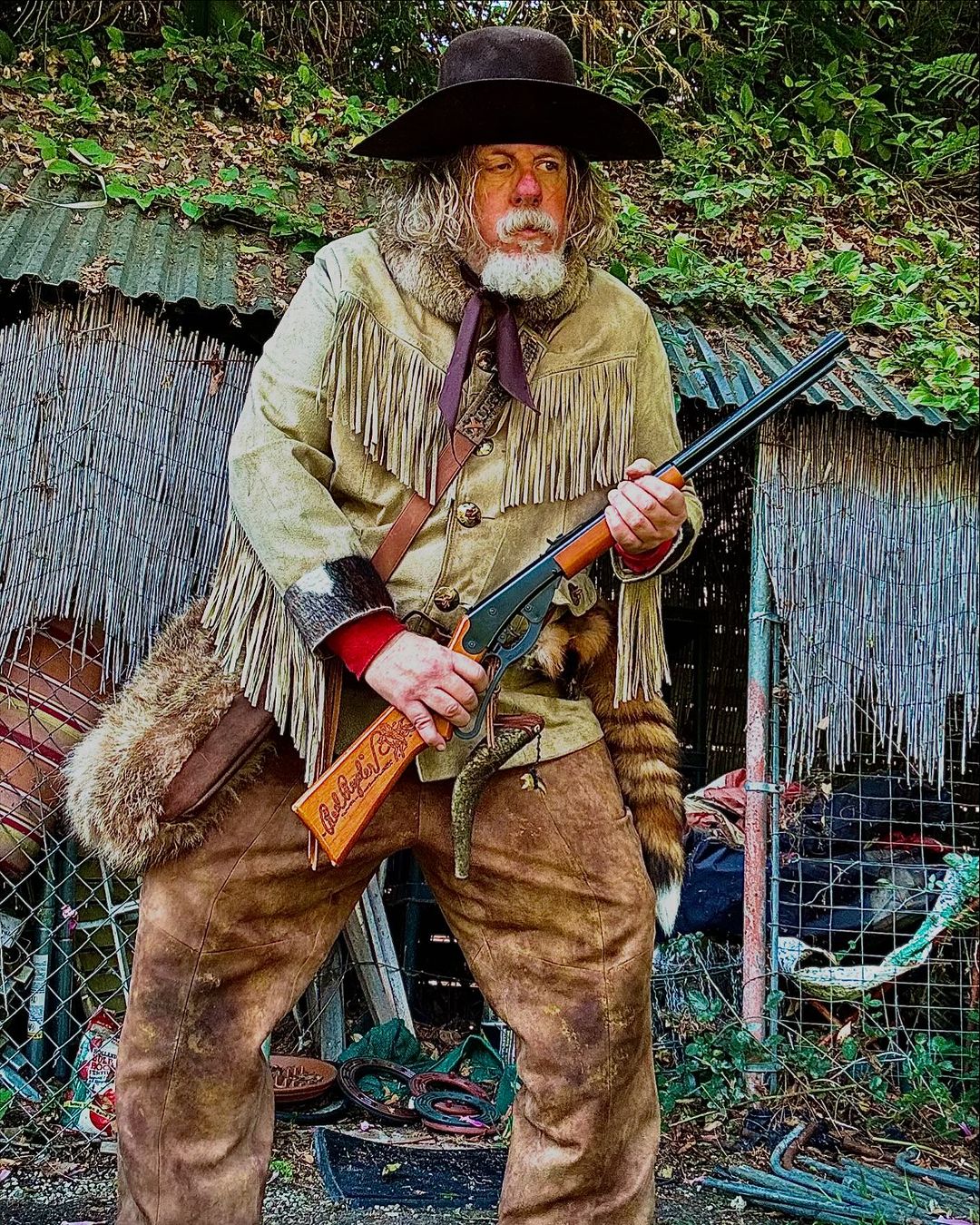
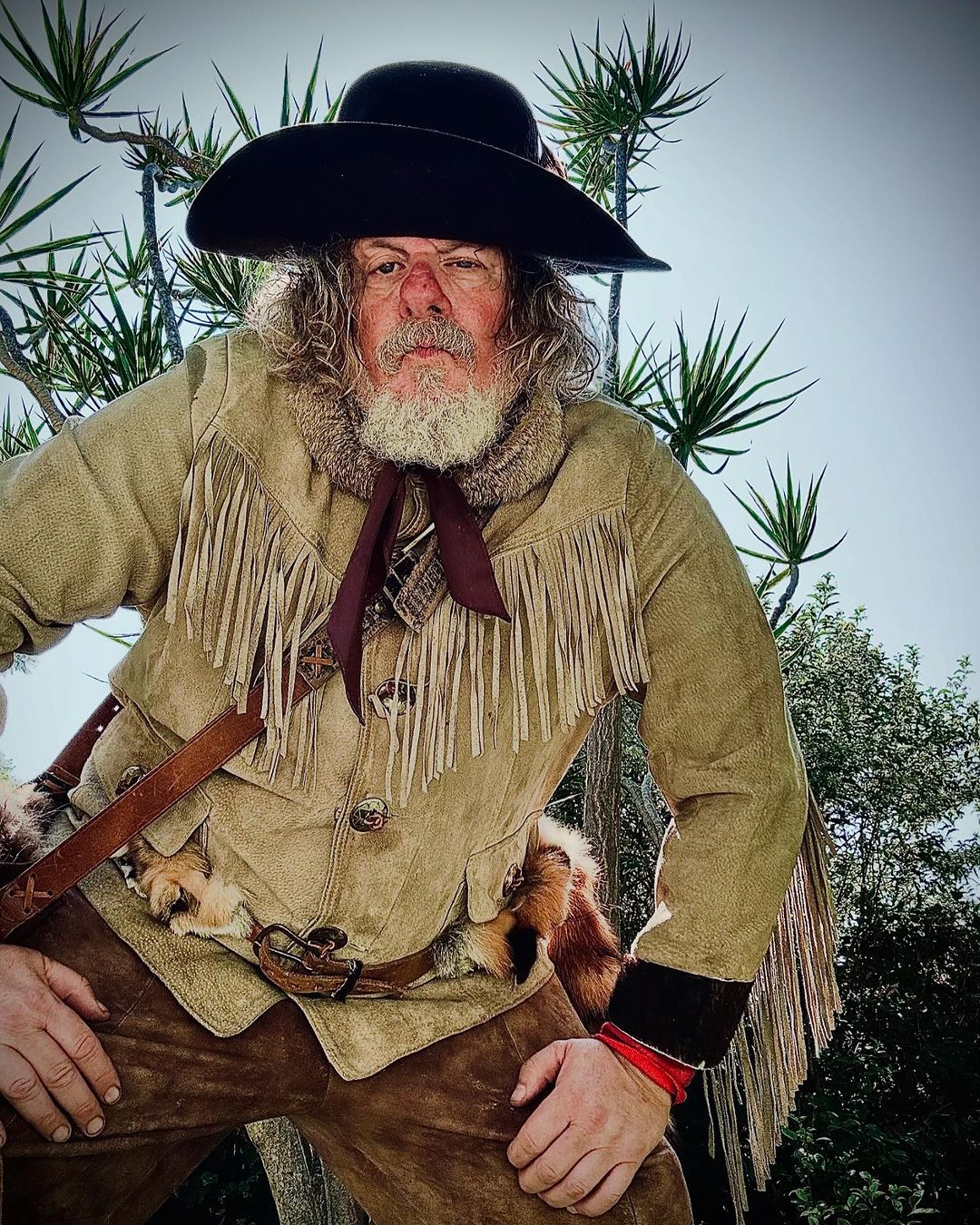
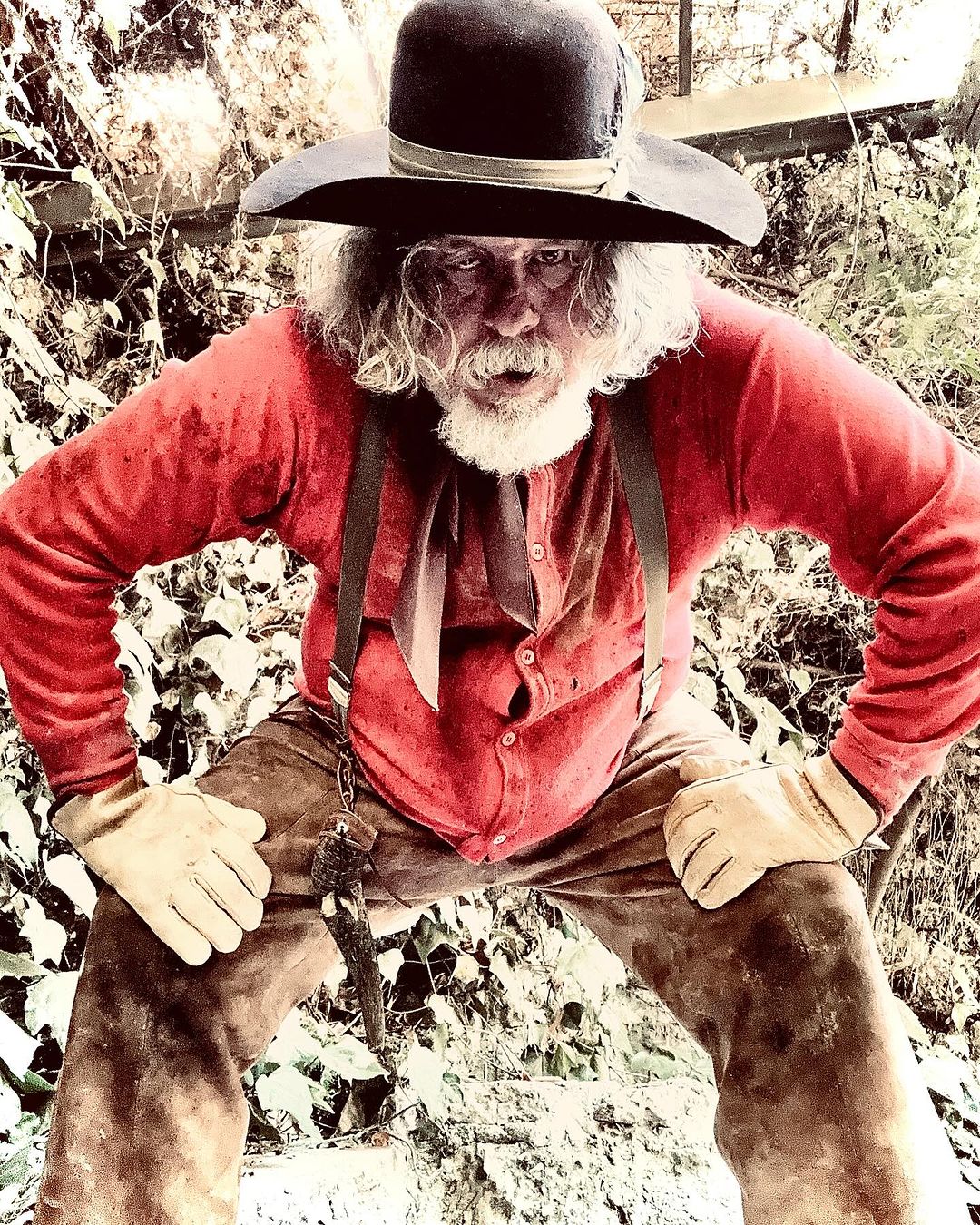
"Hedley Prestner Fellman the Third. Folks calls me Borracho, though... It's Messican for Intelligent."
—Borracho the Teamster
|

22 June 1890. Your horse is named Mukhorty. Instructions to passengers:
Zander is an American musician, actor and composer. He is perhaps best known as bass player for The Circle Jerks and The Weirdos, Stan Ridgway, Mike Watt, Thelonious Monster, and his many collaborations with Joe Strummer. Zander was to go into the studio with the Circle Jerks last October, but Keith Morris and co. gave him time off to act in this film. (How un-punk of them!)
Zander is also known for his contributions to a number of independent feature films. His first screen appearance was as "Kevin the Nerd" in Repo Man. He went on to appear in a number of Alex Cox films, such as his role as 'Karl, the Wiener Youth', in Straight to Hell. He's also made significant musical contributions in other Cox features such as Sid and Nancy (1986), the aforementioned Straight to Hell (1987), Walker (1987), The Winner (1996), and this great song from El Patrullero (1991):
|

Still not impressed? During the mid-'90s Schloss also worked with Scott Weiland of Stone Temple Pilots and Velvet Revolver in The Magnificent Bastards and again with The Circle Jerks for their major label debut and final studio album "Oddities, Abnormalities and Curiosities" (1995, LP, Mercury Records). Schloss re-joined the Circle Jerks for their 1990 U.S. tour and continues to tour and record with the Jerks. Zander is also the stepbrother of screenwriter Abbe Wool (Sid and Nancy) and composer Dan Wool (and screw you for still not being impressed). He's also appeared in a couple of Bill Fishman films, Tapeheads and Desperate but not Serious (featuring the writing of Abbe Wool and this author).
 |
 |
 |
 |
 |
 |
 |
 |
|
 |
 |
 |


|

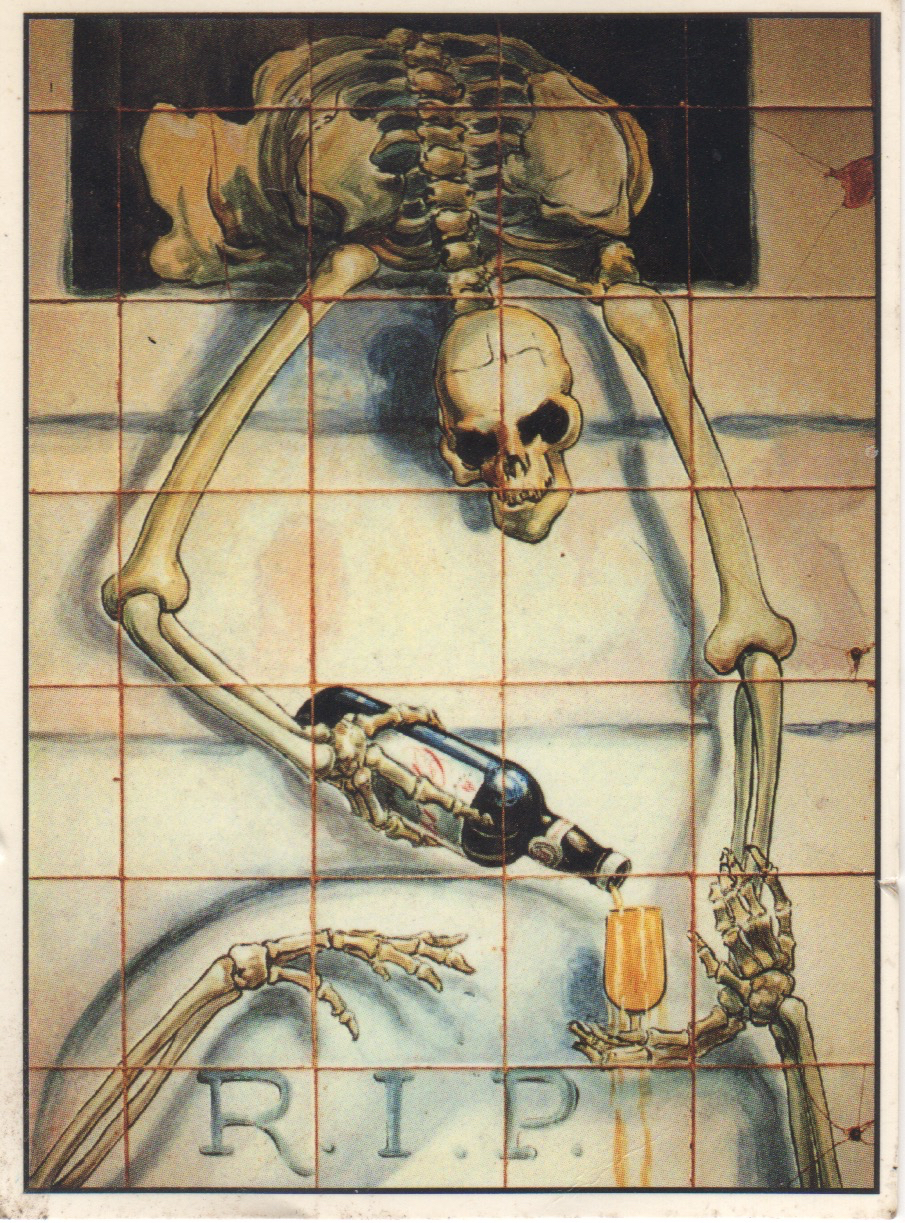
In the 1800s, smoky mezcal poured its way across the Mexican border and into the mouths of many a cowboy/vaquero. This potent spirit is derived from the agave plant. (If it is made from at least 51% blue agave plants—and owned by a celebrity like George Clooney or Dwayne "The Rock" Johnson—it is called tequila, while regular mezcal can be made from any old agave plant.) In 1865 the Santa Fe, New Mexico, Weekly New Mexican published a story that read, "The Mexicans make a brandy they call mescal. It is distilled by the simplest and rudest process. We saw a sample which has been made with care, and was four years old, which has an oily body and the flavor of the best brandy." Certain brands centered in the province of Santiago Mattelán have a red maguey worm (or "Guano de Maguey") in their bottles. They also eat these words in tacos with guacamole and are considered a delicacy (if you're a lizard).
|

Despite the obvious risk from drinking turpentine, acid and strychnine whiskey, the harsh liquor served an important purpose for emigrants and prospectors. It was considered a cure for the region's bad water, which frequently led to abdominal discomfort and diarrhea. The combination of alkali water and diarrhea generated plagues of cholera... a disease so horrible that people said, "I'd rather have strychnine." So... name your poison!
NOTES ON THIS PAGE:
Q: "Were you playing music where you grew up, in Missouri?"
A: "I was in Missouri until I was 13 years old and moved to California. I started playing music when I was 12 [circa 1973] with the guitar and mainly listening to singer-songwriter stuff like Bob Dylan and Neil Young and also a lot of traditional bluegrass, Doc Watson and stuff like that."
Q: "This was before punk rock?"
A: "Punk rock came so much later in in my musical history. I didn't join the Circle Jerks until 1984, so there's a whole lot of different styles of music that I explored before that. When I got out to California, I started getting into rock'n' roll—y'know, Jimmy Page and Jimi Hendrix and Eric Clapton, wanting to be an electric guitar hero. And in my senior year of high school, I started getting into playing jazz. I played in the big band in high school and subsequently lived with my jazz teacher for a year and had a very strict regimen of practice, transcribing Charlie Parker and John Coltrane solos, and mainly listening to saxophone players and piano players to learn how to play the guitar, just getting into more and more complex types of music. And after moving to Los Angeles and going to music school here, I joined a band [the Juicy Bananas] down in the Inglewood, Compton and Watts area, playing mainly funk and soul. That was just previous to joining the Circle Jerks. And during the filming of Straight to Hell [released in 1987] I started to develop my interest in in Latin music, mainly because hanging out in Spain, being exposed to Flamenco players and, of course, traveling to Mexico and Central America for the filming of Walker [also released 1987]. I was down there for three months and really just developed a love for Latin music. I think that's what really intrigued Joe Strummer about me, my curiosity for all different types of music."
Q: "And you met him for the first time on the Straight to Hell shoot?"
A: "No, I was a ghost guitar player on the Sid and Nancy soundtrack in London. That was my first time meeting Joe. He was kind of coming out of the studio as I was going in. I play on the actual score, not the Sex Pistols songs themselves, but the musical score in the movie; when they're making out in the alley and the trash is falling down in slow-motion, that's me playing the guitar. So I had met Joe prior to the filming of Straight to Hell in Spain."
Q: "I actually did not get a chance to revisit Sid and Nancy. I made a mistake here, in doing research: I decided I hadn't seen Alex Cox's Walker in years, so I was going to rewatch it and get some questions about your scenes. But I didn't notice any—I could barely even spot Joe. Where can I see your image in the film Walker?"
A; "It's in there. You know, Alex shot something like 500 hours of footage down there [in Nicaragua, where Cox shot the film, a topical dark comedy about American imperialism in Central America]. Of course, I don't know if you know this or not, but there was a huge cast and a pretty big budget for that time. That, mixed in with the fact that there was a civil war going on, made things a bit chaotic; and we were hanging out there for a good three months. But even Joe, and myself—if you blink your eyes, you'll miss us. You know everybody was just kind of 'on call' down there and subsequently, when it came to editing the film, a lot of stuff got cut out."
Q: "Did you have scenes with Joe that got cut?"
A: "Nothing with Joe. We did in Straight to Hell, but nothing with Joe down in Nicaragua. We didn't interact in that. I played a Prussian soldier of fortune; I guess you can see me leading the President of Nicaragua to his execution. But there's many times that I appear; I'm bearded and I'm in a very fancy sort of Prussian soldier outfit. I think that was actually due to the fact that, in the roles that I played in Alex's films before that, I was always either a nerd or somebody who was kind of kicked around. I think Alex was trying to redeem himself by giving me this fancy, dignified wardrobe."
"And Joe had a beard, and very long hair too. He was real scruffy in that movie! But we lived together for a short time and in a house in Granada, Nicaragua and spent a lot of time together down there."
Q: "Any particular stories or memories that stand out—was there weirdness due to the political situation...? Did you play any music down there?"
A: "I did, I did play music down there and yeah, there was lots of weirdness—we were surrounded by people that were CIA, and gonzo journalists from Time and Life, very extreme people, and a lot of different people down there that were associated with the Sandinistas—Russian and Cuban advisors for the Sandinistas, and a lot of intrigue and black-market gangsters and stuff like that. I mean, it was pretty epic. And it was really hard to track all the different factions and the changing of the guard, with a dictator being cast out of power and the Sandinistas trying to bring socialism into Nicaragua. Those kind of transitions can be pretty shaky, so there was a lot going on. It's almost too much to mention."
Q: "It's a singular film—though it isn't my favorite of Alex's films. I think I'm probably alone in that Straight to Hell is my favorite of his movies. I don't think there are many people who love that film like I do."
A: "I don't know about that. You know, from my perspective, a lot of people love that film! It's chock-full of rock stars having a big party and, regardless of the fact that there was barely a script to it, it's a lot of fun. I think Alex originally intended on doing Walker before Straight to Hell, and then we just sort of, like. diverted and maybe almost took a vacation out in Spain and in the interim filmed a kooky Italian western spoof..."
Q: "I love what you do with the character of Karl. I have Alex's book here, X Films: True Confessions of a Radical Filmmaker, and I read that Joe actually co-wrote some of the songs that Karl does."
A: "Well, Joe and I co-wrote 'Salsa y Ketchup,' which is the song that that Karl sings in the film. That was a collaboration between myself and Joe Strummer, which, you know, at the time I was like [shrugs], 'Oh yeah, I'm writing a song with Joe Strummer,' but y'know, I guess, retrospectively, not that many people really got to collaborate with him on that level. So that was pretty special."
²—"Update 1: Zander Signs Up" by Alex Cox, 6/21/2024.
³—See Last call: Learn about America's Old West saloons, by Mark McLaughlin, Tahoe Daily Tribune, Dec 23, 2015; and Old West Booze: A Gamble in Every Libation!, by Michael D'Angona, Athlon Outdoors. For Mezcal, read Magical Mezcal by Sherry Monahan, True West Magazine, June 11, 2021.
"Straight to Hell" performed by Zander Schloss; Video directed by Alex Cox. |