|
|
 |

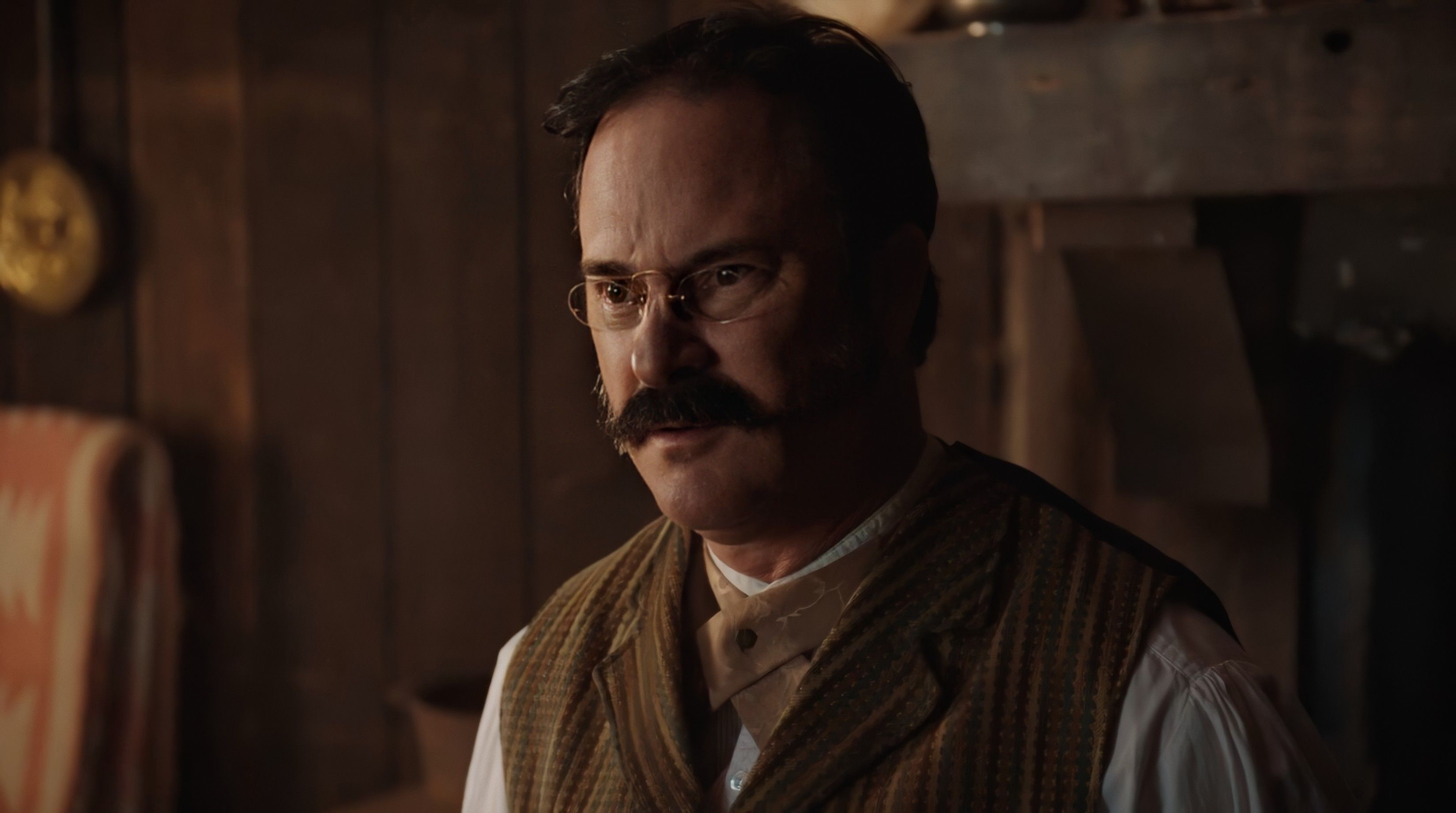 

"Smoke clears the lungs. Much healthier than snuff."
—Doc Stanton
Dick Rude plays the role of "Doctor Stanton," a devoted husband and father of two who caters to a largely lawless mining community in the best, if slightly misguided, way that he can. Stanton believes that smoking expands your lungs; he believes that new "temperance drink" from Atlanta called "Coca-Cola" made of coca leaf and kola nut is great for the kids! (An entire list of what doctors believed in 1890 is printed, below.)
Rude (born 1964) is a director, actor and writer born and raised in Los Angeles. His film career began at the age of 15 when he attended the Lee Strasberg Theatre Institute. As an actor, Rude's early acting career consisted of roles in various films, such as the horror flick Night of the Comet (1984) with Catherine Mary Stewart, and The Wild Life (1984), written by Cameron Crowe, and Abbe Wool's Roadside Prophets (1992) with John Doe. Rude has also appeared in several Alex Cox films including Repo Man, Sid and Nancy, and Walker. In 1986, Rude left UCLA Film School to co-write and star in Cox's Straight to Hell, which features such notables as Joe Strummer, Dennis Hopper, Courtney Love, Elvis Costello, Jim Jarmusch and The Pogues. His most recent film is Let's Rock Again!, a 2004 documentary that documented the final tour of musician Joe Strummer shortly before his death in 2002. Rude went on to direct the Red Hot Chili Peppers music videos "Catholic School Girls Rule", "Fight Like a Brave", and "Universally Speaking" as well as their live concert DVD Off the Map. Other writing credits include a pilot for Sophia Coppola called "Hi Octane," and an un-produced script commissioned by actor River Phoenix.
His most common movie death is getting shot in the chest: In Night of the Comet (1984) he is a Stock Boy who is gunned down by scientists; In Repo Man (1984) he gets shot in the chest when he tries to hold up a convenience store; In Straight to Hell (1987) he gets shot in the chest by Joe Strummer after they dig up the buried money; he dies shortly afterwards while talking to Joe (who had been shot in turn by one of the Pogues).

 
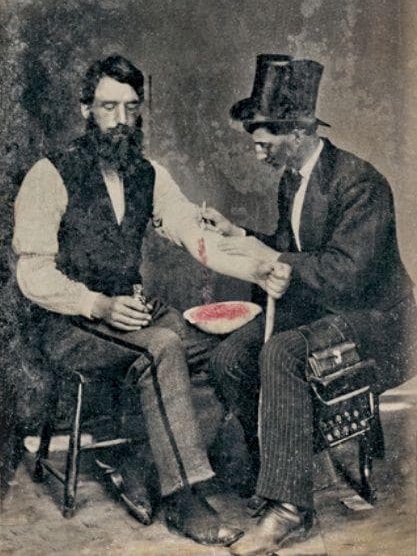
Mining camps and towns such as the one in Dead Mexicans were notorious for violence, and doctors spent much of their time patching up bullet wounds and amputating damaged limbs—sometimes with a meat saw or butcher knife, whatever was at hand (so to speak). Colds and flu were common due to the close quarters people shared in saloons, bordellos and other meeting places (tuberculosis, small pox—and yes, as Doc Stanton mentions, syphilis—were also common). Pioneers relied on doctors for medical treatments, but the majority of frontier doctors lacked a medical degree. Anyone could pretend to be a doctor and promote treatments like drinking sulfur or applying leeches. They used carbolic acid to clean wounds and had sutures with needles and thread in case he needed to sew any wounds closed. They usually carried forceps, catheter, stomach pump, syringes, heating iron, various bandages, splints and a thermometer. Sometimes the treatments were actually more dangerous than the conditions they treated. For instance, frontier doctors often prescribed a mercury compound for ailments, but it made people's teeth fall out. They rubbed opium or morphine on a wound—there was not much if any other pain relief; if you needed an operation, it was very likely you wouldn't survive. Antiseptics were still rare and antibiotics unknown, so cuts and wounds proved deadly due to germs and infection. Drugs had to be ordered from the East so many doctors turned to nature and collected wild plants such as raspberry leaves, spearmint, peppermint, fleabane, mustard, and Doc Stanton's favorite lung remedy, tobacco. But physicians had to use other remedies, as well: Whiskey was used as an anesthetic—and the patient could drink a good amount to help relieve pain. Bloodletting was still a common practice at this time. Some other types of treatment for common maladies:
Arrow Removal: cut off the arrowhead and pull the shaft through the body.
Cholera: Red pepper and whiskey or brandy.
Bullet Wound: Apply gunpowder to the wound.
Cuts: Apply spiderwebs over the cut to stop bleeding
Pain: Opium, laudanum or paregotic. Opium was also prescribed to control coughing and diarrhea.
Baldness/Thinning Hair: Smear your head with fresh cow manure.
Syphilis: arsenic and mercury.
Asthma: One company sold heroin tablets to relieve symptoms.
Toothache/Sore Throat: Cocaine drops. One Belgian company even promoted cocaine throat lozenges as "indispensable for singers, teachers and orators." Dentists and surgeons also used cocaine as an anesthetic.
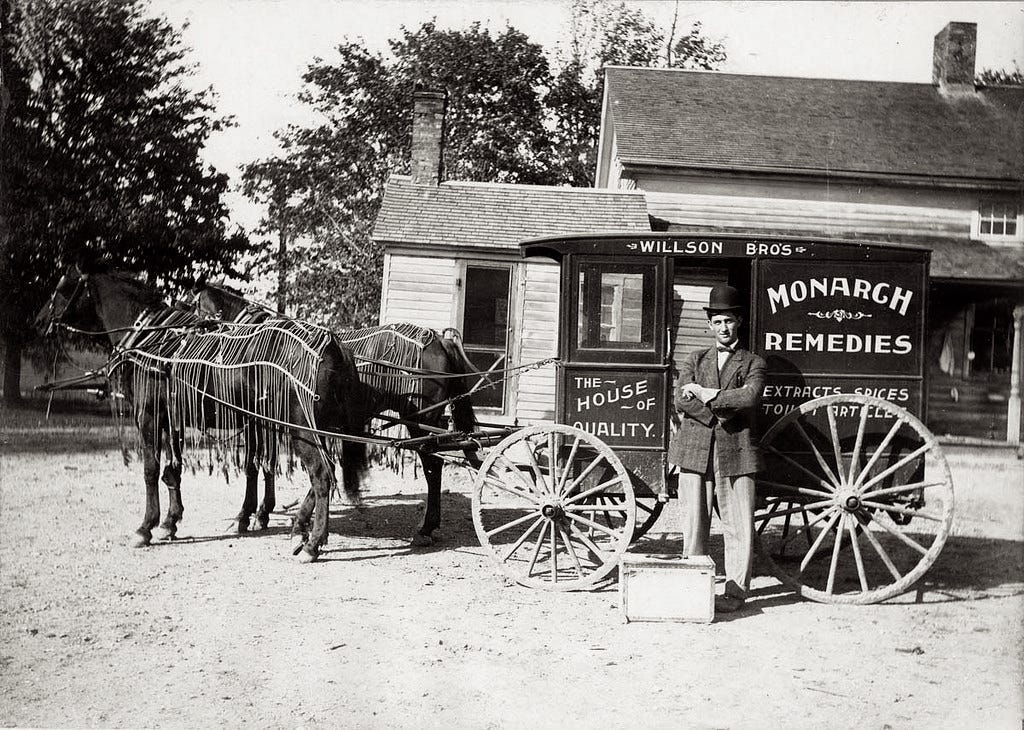
Unregulated medicinal "tonics" were also sold containing ingredients including cocaine and opium. In 1886 John Pemberton of Atlanta, Georgia began to market "Coca-Cola," a syrup derived from coca leaves and African kola nuts. It was also marketed as a "temperance drink" in place of alcohol, and sold as a refreshing drink in soda fountains. By 1902 there were an estimated 200,000 cocaine addicts in the United States.

|