|
|
 |

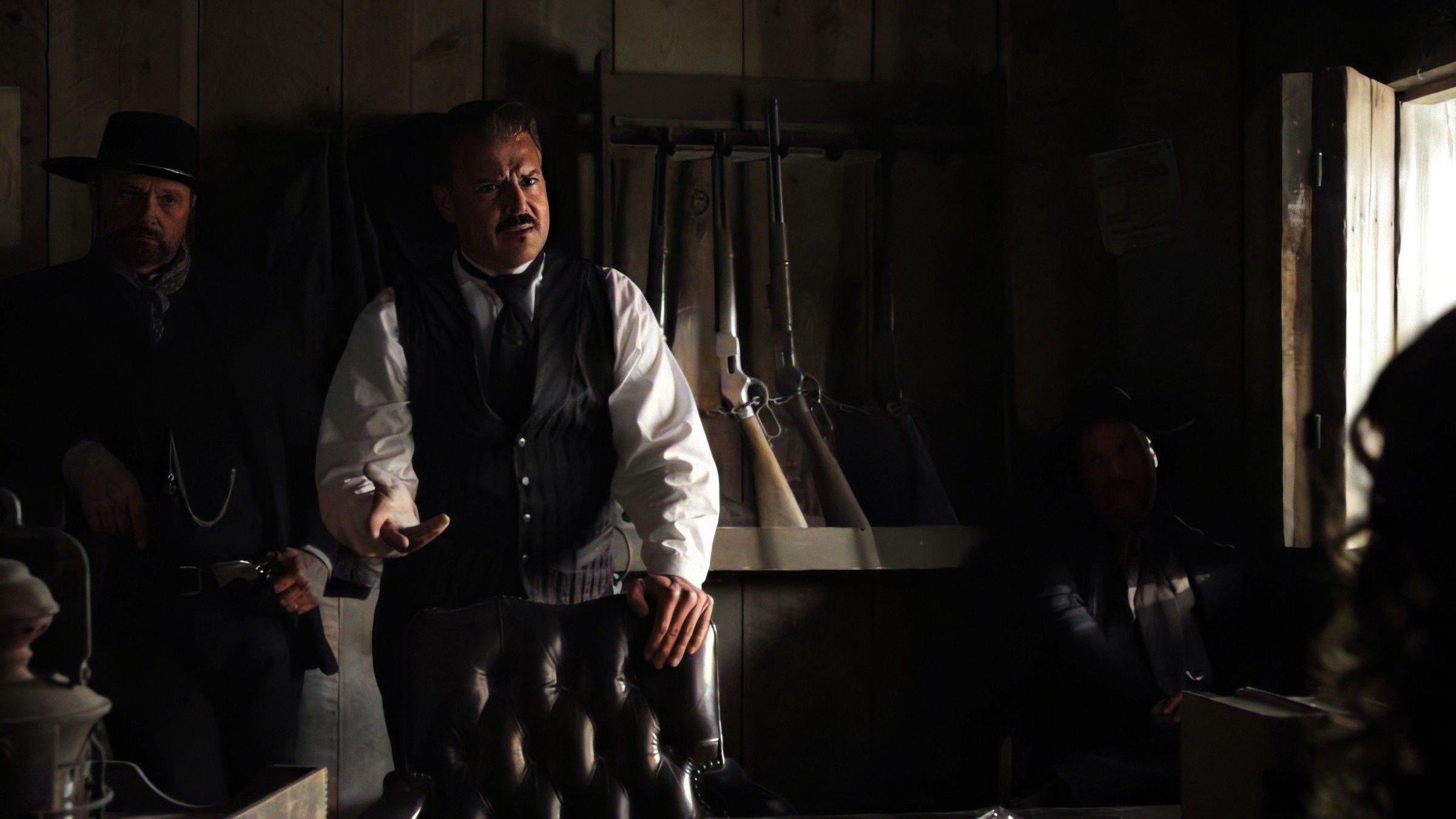 
 "Don't give me any of your bullshit, swindler. You're a confidence man, wanted in the Arizona Territory for desecrating a cemetery, dynamiting a cantina, and forging a widow's will... I mean to extradite you, put you on trial, get a conviction, and send you to the Federal Prison at Yuma. Unless..."
—Samuel S. Vistov, Federal Prosecutor
Levee Duplay plays Samuel S. Vistov, the Federal Prosecutor in the story. Dupree calls himself "the lead antagonist, Prosecutor Samuel S. Vistov, in Government Work, directed by the legendary English Filmmaker Alex Cox! Known for unforgettable classics like Repo Man and Sid & Nancy, Alex has truly reshaped cinema, and it's surreal to join him on his final feature film based on Gogol's Dead Souls. Extra special that my twin boys, Gus & Felix, will make their debut alongside me! We're all thrilled to help bring this epic project to life and make Alex's last film a success!"
Levee's two sons, Gus and Felix Cetera, play the children of Doc Stanton and his wife, Rebecca.

We think of the Old West as lawless, but there were plenty of legal authorities. There were city marshals, city constables, city policemen, sheriffs, deputy sheriffs, county marshals, deputy marshals, U.S. Marshals, Deputy U.S. Marshals, rangers, state police officers, Pinkerton Agents, Secret Service agents, Cattlemen Protective Agents, bounty hunters, bail bondsmen, posses, railroad agents and armed guards like stagecoach shotgun men. But the Federal Prosecutor (or 'United States Attorney') stood above them all. He was a lawyer appointed by the President in each judicial district to be the chief federal law enforcement officer—but how he (it was always a "he") got into that position varied, because law schools were uncommon until the late 19th century. Most people entered the profession as an apprentice under the supervision of an experienced lawyer. (A number of jurisdictions in this country still permit this practice, but exact rules vary per state.) Lawmen in the west did not have the constraints that apply to lawmen today; they were always well-armed and did not have to read a suspect their Miranda rights before interrogating them, and they could collect personal evidence without a warrant. Although torturing a suspect was technically illegal, they were unlikely to be prosecuted for doing so, and a coerced confession was admissible as evidence; a court would instruct a jury that a confession obtained under torture could be considered less reliable, but it could still be shown to the jurors. In other words, our man Strindler is in trouble!

|