|
Heinrich Kley
Illustrator
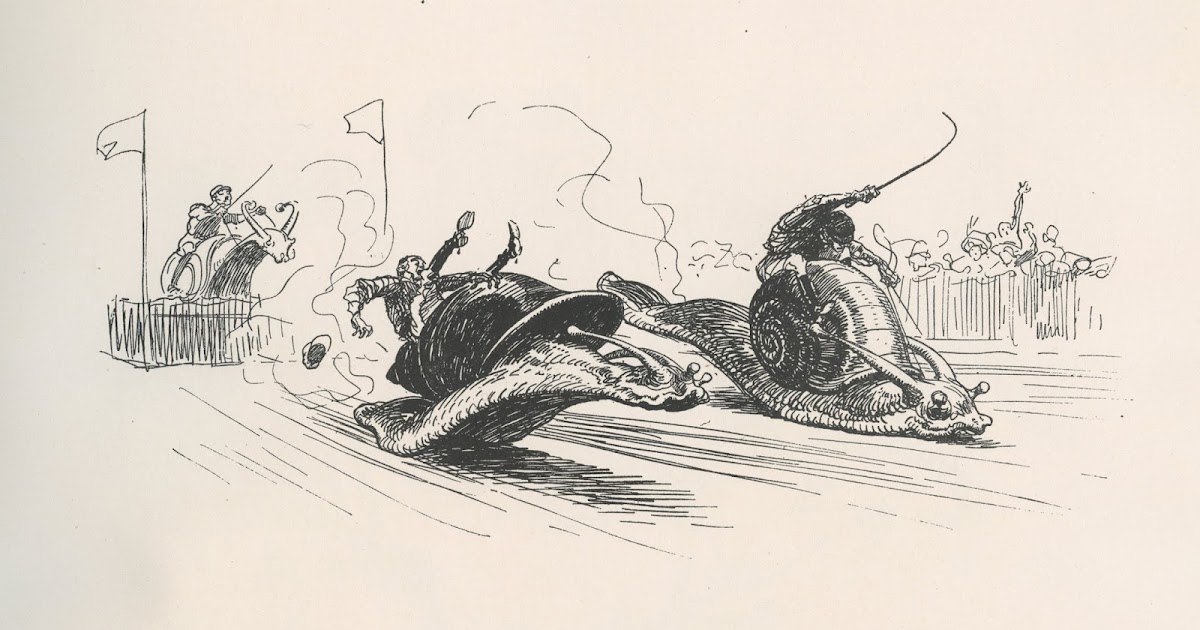
Heinrich Kley was a German illustrator who became known for his industrial drawings but gained immortality for his once-secret pen & ink sketchbook drawings of mythical creatures, anthropomorphic animals and (most fantastically) humans, contrasting them with the morality of industrialized 19th and 20th Century Germany. Once discovered, his work became popular for its humor and insight (and was consequently banned by the Nazis) and was collected in a series of sketchbooks—which are still in print, over a century later!
David Apatoff, the Art critic for the Saturday Evening Post, said: "Kley's success was attributable to a combination of factors. He had a vivid imagination for symbolism and allegory. Working in a field where photo reference was impossible (there were, after all, no photos of dancing elephants or flying witches to copy), Kley was largely dependent on his own imagination. He also had an unorthodox sense of humor. He possessed great technical skill; his fluid line was lively and spirited, and his style came across as genuine in an era when other artists had polished and refined much of the character out of their line work. Apparently, Kley's art was as spontaneous as it looked. Despite the complexity of his pictures and the difficulties of imagining animals performing human roles, it appears that Kley worked directly in ink, rarely drawing preliminary sketches or pencil studies before applying pen to paper. For the most part, Kley drew without models."

Kley studied "practical arts" at the Karlsruhe Akademie and then furthered his training under the tutelage of artist C Fritjog Smith, and graduated from the art academy in 1885. The following year he married Theophanie Krauter. His first attempts to find work as a traditional painter met with little success, but in 1901 his fortunes began to change. He received an important commission from the Krupp steel foundry for a series of illustrations to publicize their industrial operations. Kley's work on this project led to further commissions from Krupp, as well as from other manufacturing clients. He won a reputation for painting manufacturing scenes in oils and watercolors for many large German industrial factories such as Rupp, MAN and Bilfinger. His developing knowledge of industrial architecture and machinery would serve him well in grounding his later fantasy work. A critic of the time said his work captured "the poetry of the modern machine world." But this commercial advertising work hid his true genius...
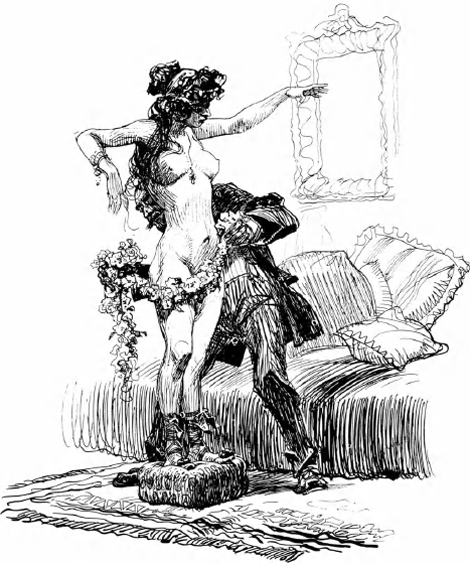
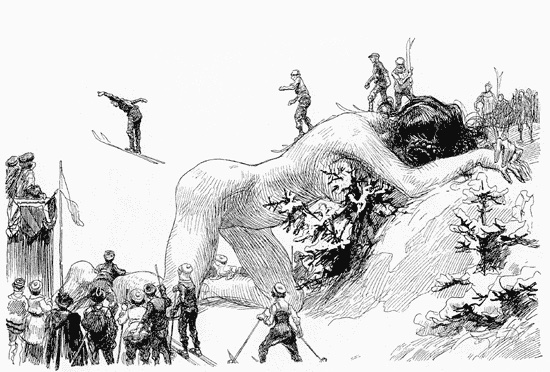
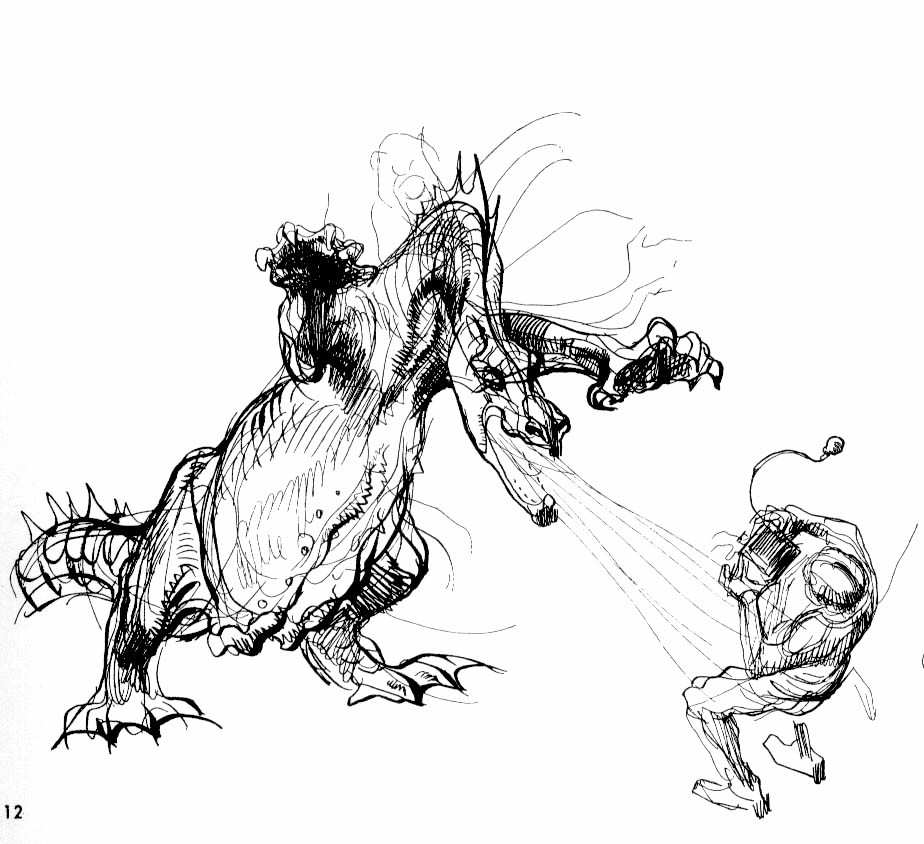
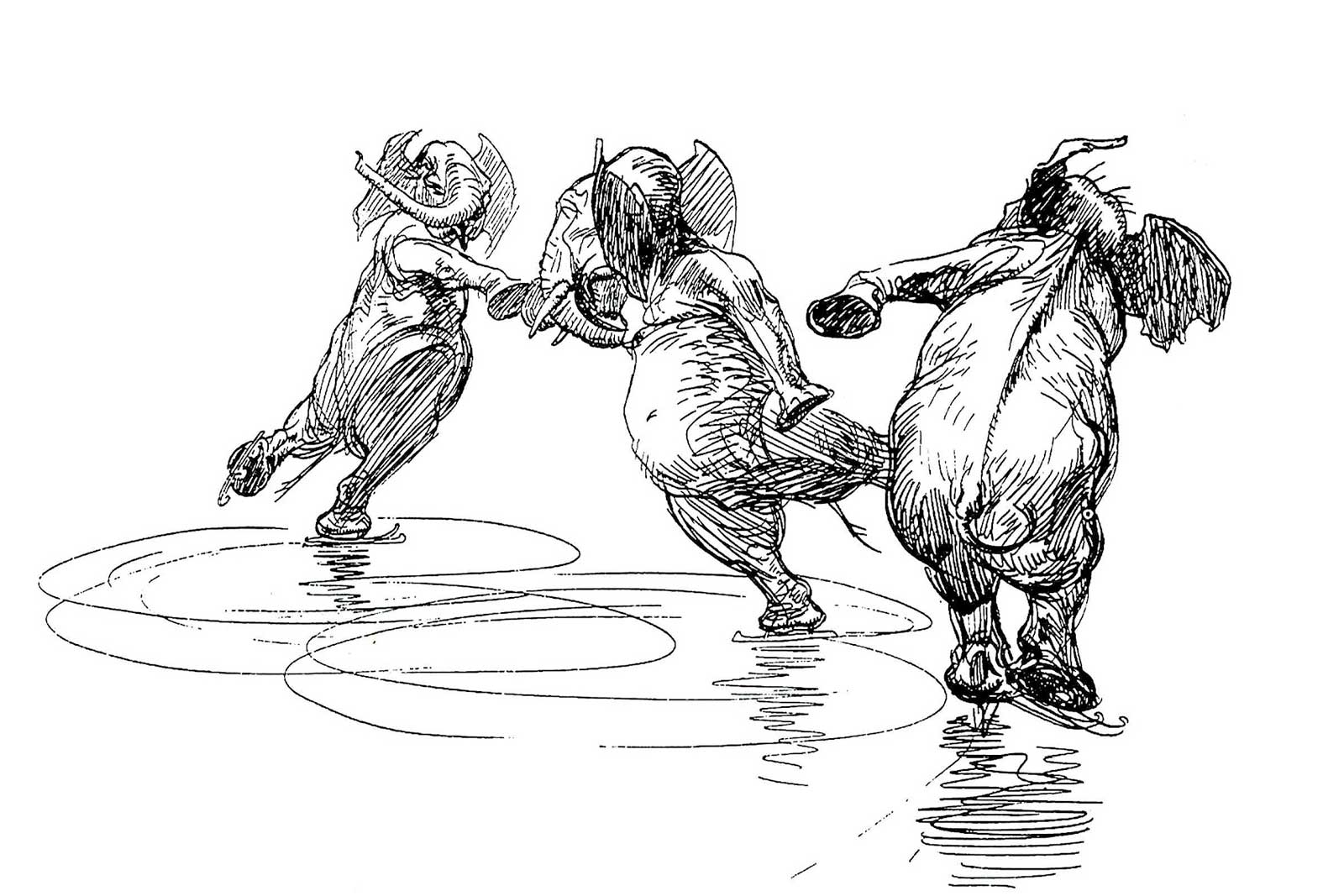
In his spare time, Kley entertained himself and his new bride with a series of personal drawings: an industrial building like he drew in his day job, but with a mischievous giant demon covering the smokestack with his hand to smoke out the workers inside; elephants, hippos, frogs and alligators in contemporary human dress dancing, skating, and acting out romantic customs. He drew his favorite model Theophanie standing nude as he decorated her with garlands of flowers. He filled sketchbooks with loose, elaborate sketches of government officials and clergy conducting themselves in bodily functions, orgies and everyday scenes of modern Germany, but juxtaposed them with anthropomorphized animals and mythological creatures. Kley didn't share these personal sketches with clients, but word of his private drawings eventually leaked out to friends. In 1908, when the artist was 45, a friend showed one of Kley's sketchbook to the publisher of Simplicissimus, a popular graphic arts magazine. The publisher, Albert Langen, immediately hired Kley to draw for the magazine.'s drawings soon appeared regularly in the art magazine Jugend and the newspaper Berliner Illustrierte Zeitung, as well as in Simplicissimus, and they caused a sensation. These illustrations made Kley so successful that he relocated to Munich in 1909. Langen then published Skizzenbuch, a separate book containing 100 of Kley's pen-and-ink drawings, which was followed a year later by a second book, Skizzenbuch II. In 1910 a gallery even began exhibiting Kley's original drawings for sale and they were snapped up by collectors. Kley was finally able to fully express himself and was experiencing the success he deserved.
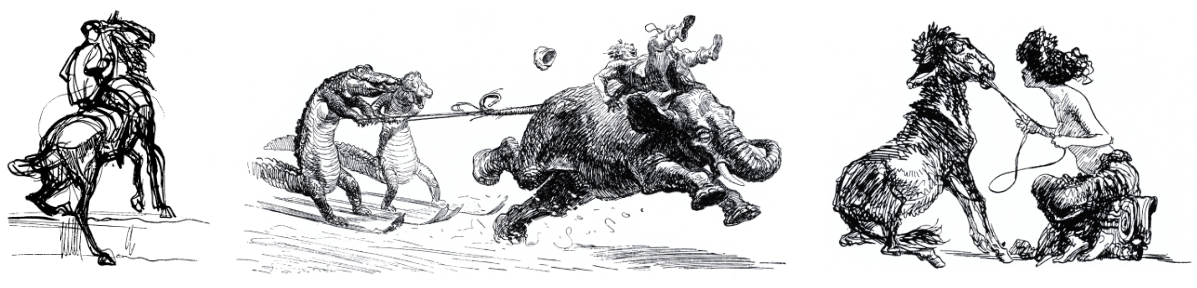
Kley's private drawings were unveiled at just the right time in history, when German society had an irreverent sense of humor and relished scandalous, decadent, even bawdy material by social satirists like Kley and painter George Grosz. Heinrich's brilliant renderings of human behavior through funny animals (to be adopted by American illustrators and animators like Walt Disney and, later, Robert Crumb), laid bare a decadent society that had left the Victorian era and was hurtling towards war and disaster, with satirical juxtopositions. Another collection of Kley's two published sketchbooks was sold under the title Sammelalbum alter und neuer Zeichnungen (Album of Old and New Drawings). But Kley was modest and had little aptitude for self-promotion to further his career. Even in later years, after he became famous, he would try to avoid the press, saying, "I've already shared where I was born and in what year. I don't think you need to know much more about me."
In 1914, at the beginning of World War I, Kley ceased working for most of his magazine clients and kept a low profile. After the war, he resumed work as an illustrator, but it wasn't the same. The democratic Weimar Republic took power in 1919, starting a period of significant political, economic, and social change, but Kley's fortunes turned for the worse. Theophanie passed away in 1922, leaving him alone with no children; the following year the German economy collapsed and Kley lost his life savings. In 1933 the Nazis took over, causing Kley to shrink once again from public life. The Nazis destroyed the printing plates for his earlier drawings, and placed his work on their "List of Harmful and Unwanted Writings." Although there is no evidence that Kley was persecuted by the Third Reich, the undercurrent of unrest, disillusionment, and a weary social system present in his work starkly opposes the socially accepted right wing conservative messages of might, militarism, human perfection, and cultural supremacy, propagated by the Third Reich. Heinrich Kley is one of many artists practicing during the uprising of the Third Reich whose life and whose work disappeared from publications because of its political and social notions.
 After the Nazis banned his work, Kley withdrew from the public eye and spent his last years working quietly in a more conventional commercial art style. In 1937, Coronet magazine introduced America to the work of Heinrich Kley with three special issues and reported that he had "died in a mad house." This fortunately proved untrue when in 1939 his work appeared in the March issue of Gebrauchsgraphik. He is cited in this article as a great commercial artist for his reproduction of industrial scenes, with no mention of his fantasy art. After this article he dropped from public view. Eventually his death was reported on so many times that the actual date and cause are unknown. A book of his drawings published by Dover Publications in 1960 could not even confirm when, or if, Kley had died. It explained, "Kley's death has been reported many times, so that it is not certain just when he actually did die." According to the Nazi banned books list, Kley died "08.02.1945", i.e., February 8, 1945. Other sources mention the date of death as 8 February 1952.
However, his brilliant graphic work still lives on. During the 1930s, artists Albert Hurter and Joe Grant touted Kley's work at Walt Disney Studios. Grant brought a portfolio of drawings to Walt Disney, who traveled to Europe in 1935 and returned with a handful of Kley's pieces. Eventually, Disney built an extensive private collection of his work (now available to see at the Walt Disney Family Museum in San Francisco). A number of early Disney productions, notably Fantasia, reveal Kley's inspiration (most obvious in the dark demons of "Night on Bald Mountain" and dancing hippos and alligators in "Dance of the Hours"). In a 1964 television interview, Walt said, "Without the wonderful drawings of Heinrich Kley, I could not conduct my art school classes for my animators." Thus beyond Kley's incredible sketchbooks, his art lives on in the characters of Dumbo, Fantasia and The Jungle Book.
Because of Disney's interest and reprints by Dover Publications, Kley is still known in the US, while he is nowadays little regarded in Germany.
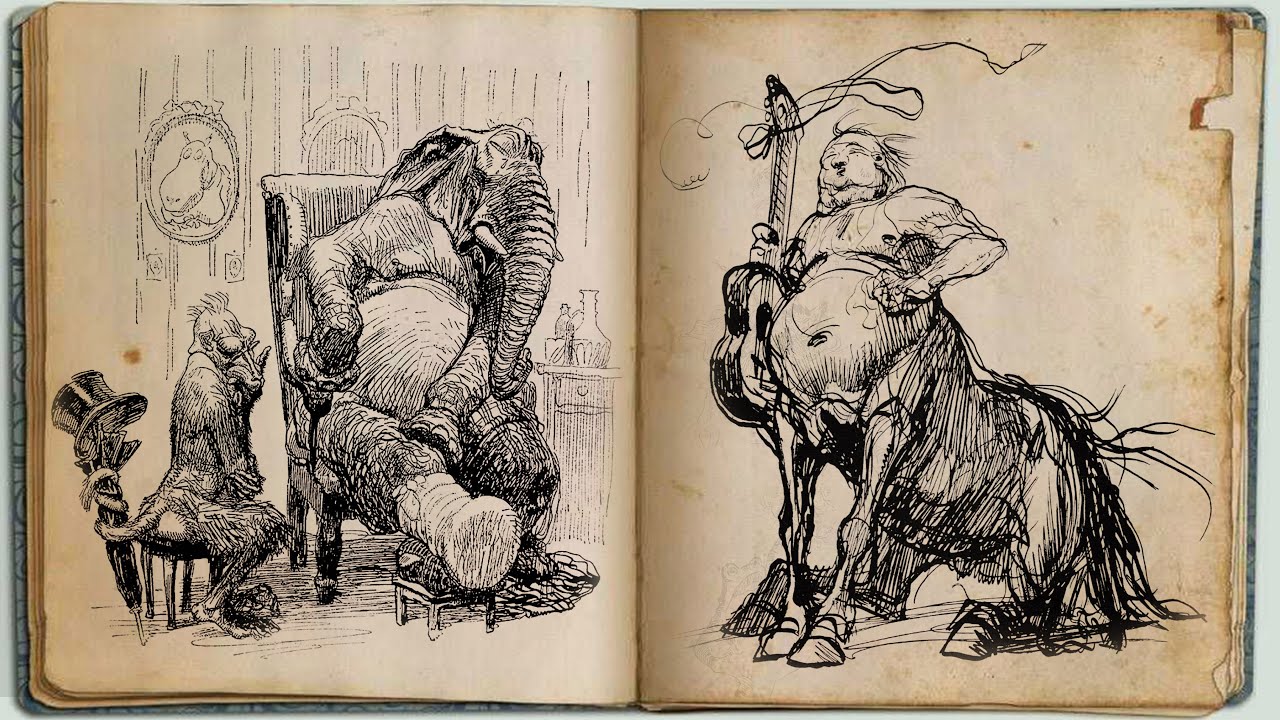
Leaf through one of Klay's actual sketchbooks!
Go back to
The Pantheon
|